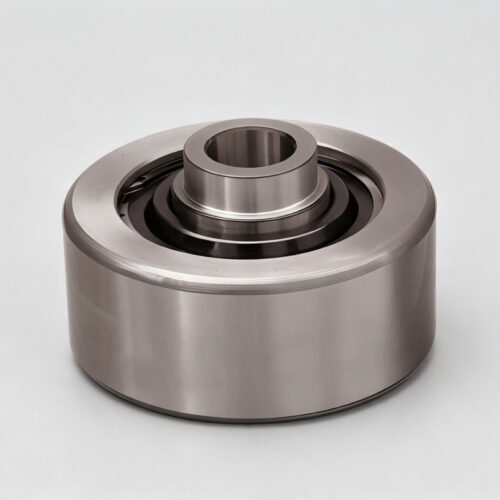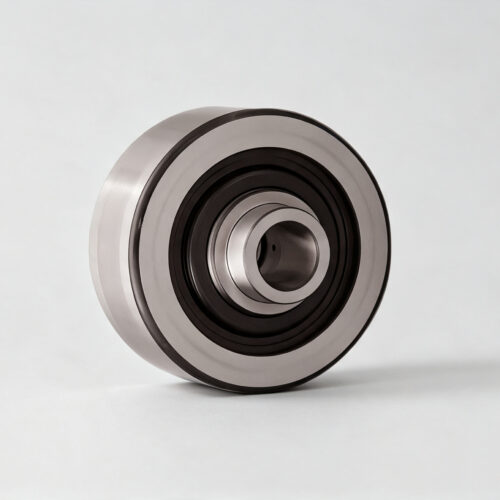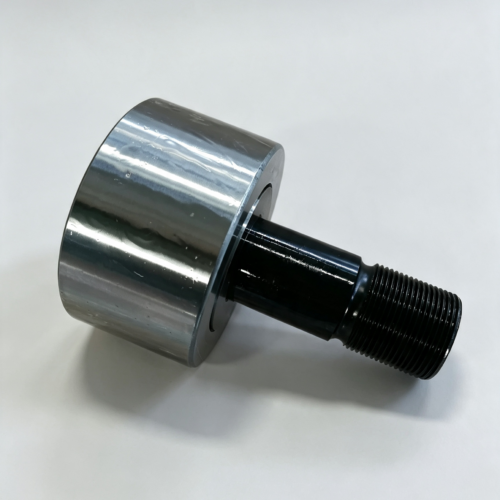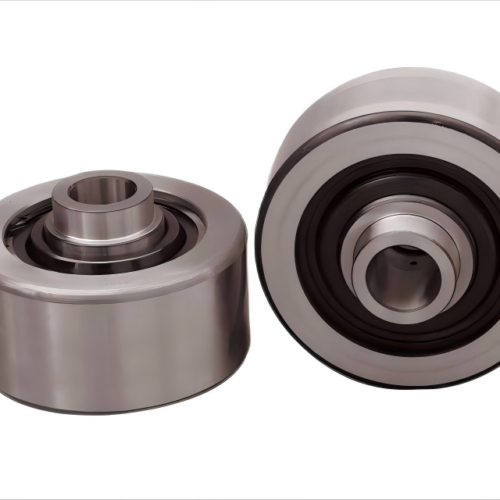
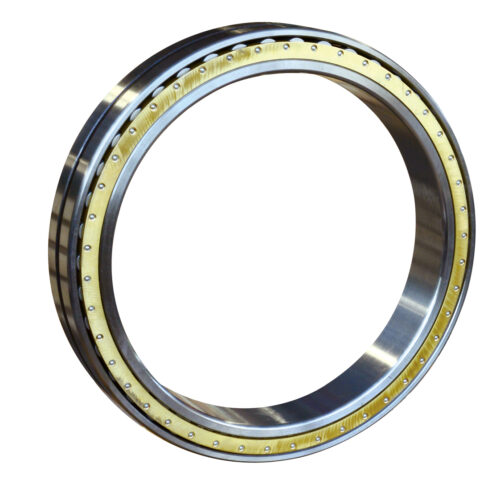
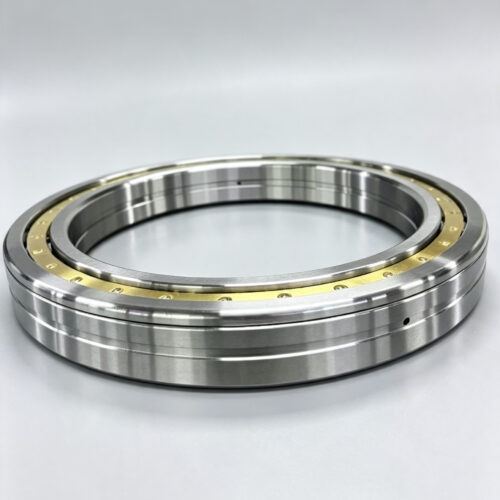
FRAC Pumps Full‑complement cylindrical roller bearings Application and Key Advantages in the Oil & Gas Industry
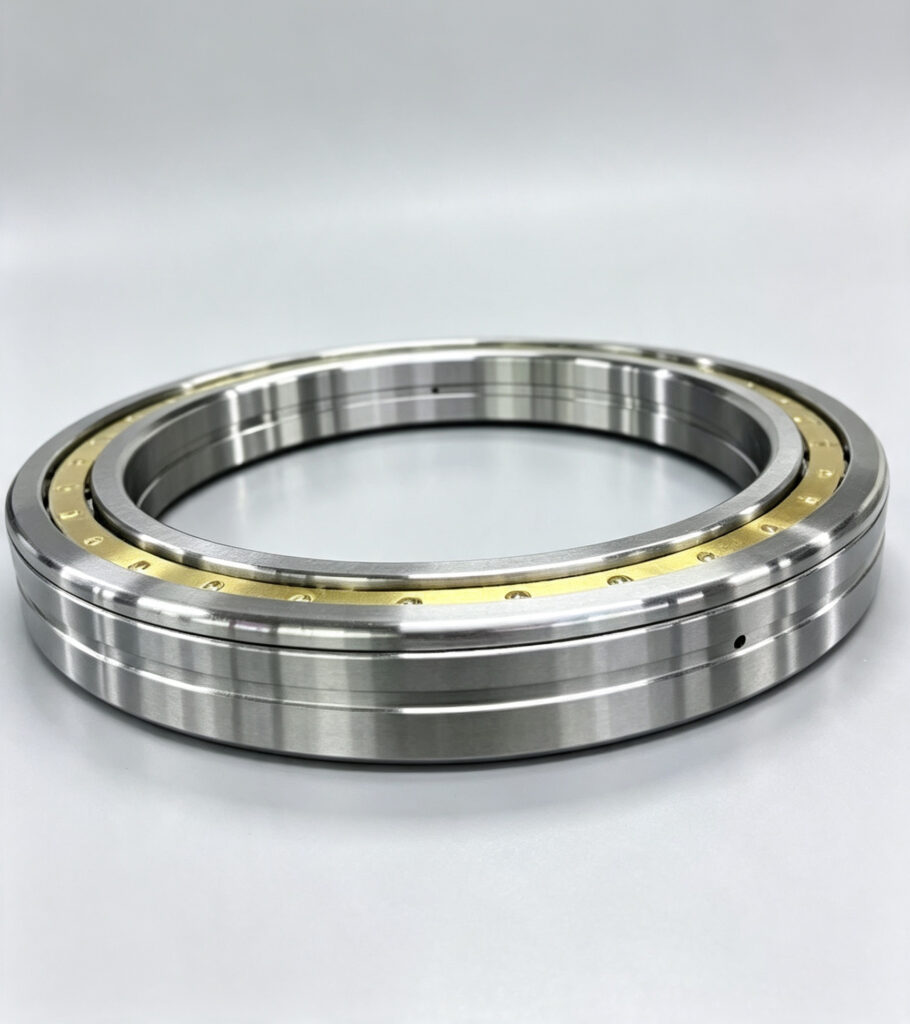
FRAC Pumps Full‑complement cylindrical roller bearings Operating Conditions : Why Standard Bearings Frequently Fail
The development of unconventional resources (shale oil and gas, tight gas) is impossible without large‑scale hydraulic fracturing (FRAC). The core equipment, the FRAC pump (typically 3‑plunger or 5‑plunger), must inject FRAC fluid (containing proppant and chemical additives) several kilometres underground within a short timeframe at pressures up to 100‑150 MPa (15 000‑22 000 psi) to fracture rock and create artificial fissures. This process imposes extremely demanding requirements on the pump’s power and hydraulic sections:
- Ultra‑high loads: Discharge pressure reaches 100‑150 MPa. Plunger forces are massive, and radial loads acting on the crankshaft, connecting rods and bearings far exceed those encountered in conventional industrial pumps.
- High flow rate: The output of a single FRAC pump is normally 1‑2.5 m³/min. When multiple pumps run synchronously, total flow can exceed 15 m³/min. Bearings must remain stable under continuous shock loading.
- Severe vibration and shock: Reciprocating plunger movement creates intermittent fluid flow, generating sharp pressure pulsations. Bearings are subjected to high‑frequency alternating loads and peak shock impacts.
- Low‑speed, high‑load operation: FRAC pump crankshaft rotational speed is only 200‑400 rpm (low‑speed regime), yet radial forces are enormous. Under these conditions, the cage in standard caged cylindrical roller bearings often deforms or fractures from shock. Friction between rollers and the cage accelerates bearing failure.
Many FRAC pump manufacturers and service companies have found that conventional designs (caged bearings or spherical roller bearings) frequently result in short service life, frequent shutdowns for replacement, and occasionally cage fracture or bearing seizure. For this reason, full‑complement cylindrical roller bearings have become the preferred solution for the power section of FRAC pumps.
Design Features of FRAC Pumps Full‑complement cylindrical roller bearings: No Cage, Maximum Roller Fill
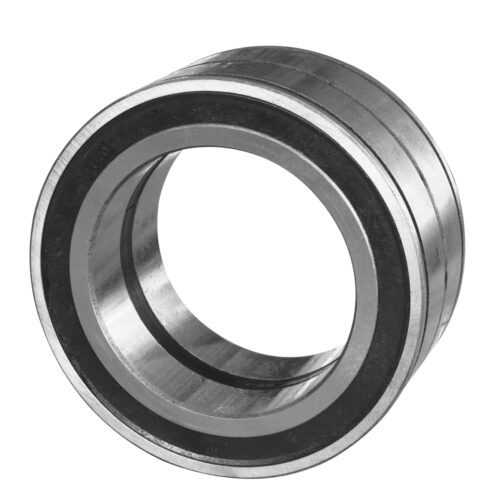
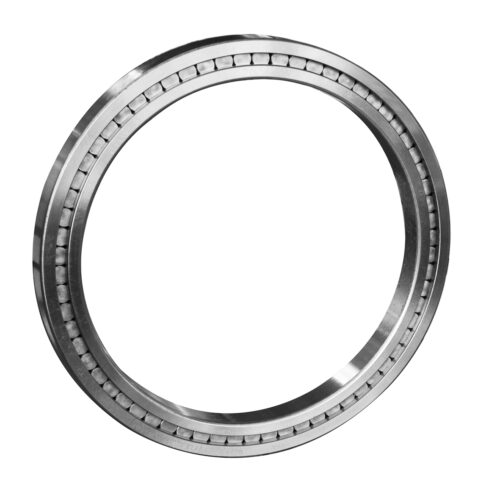
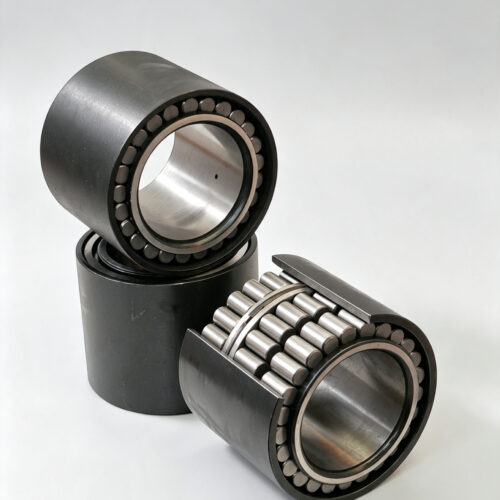
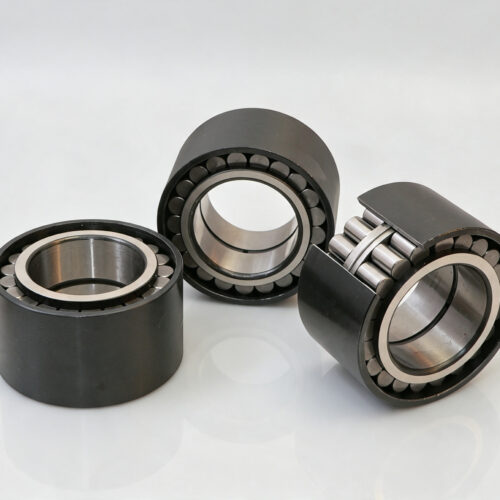
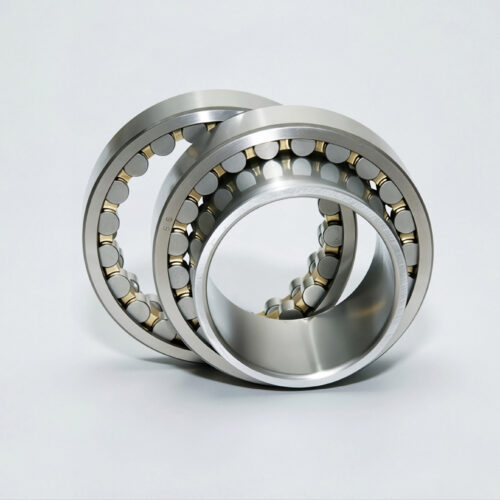
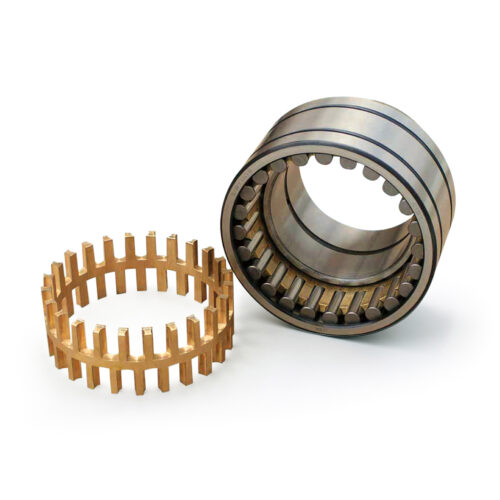
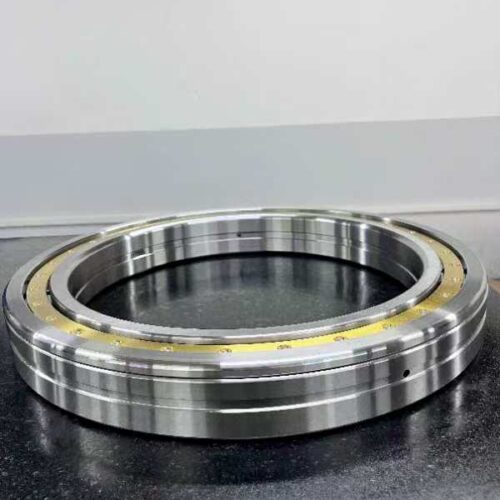
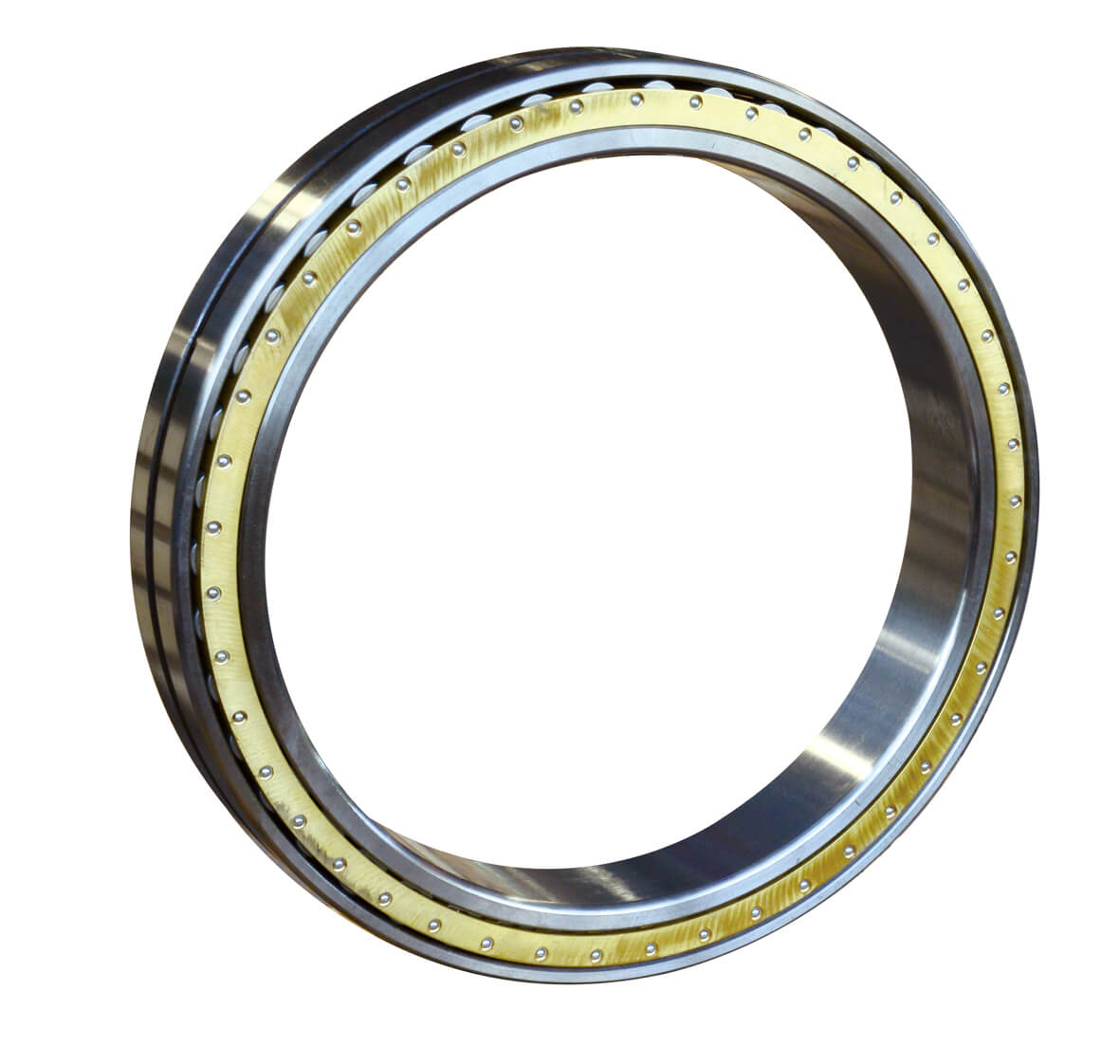
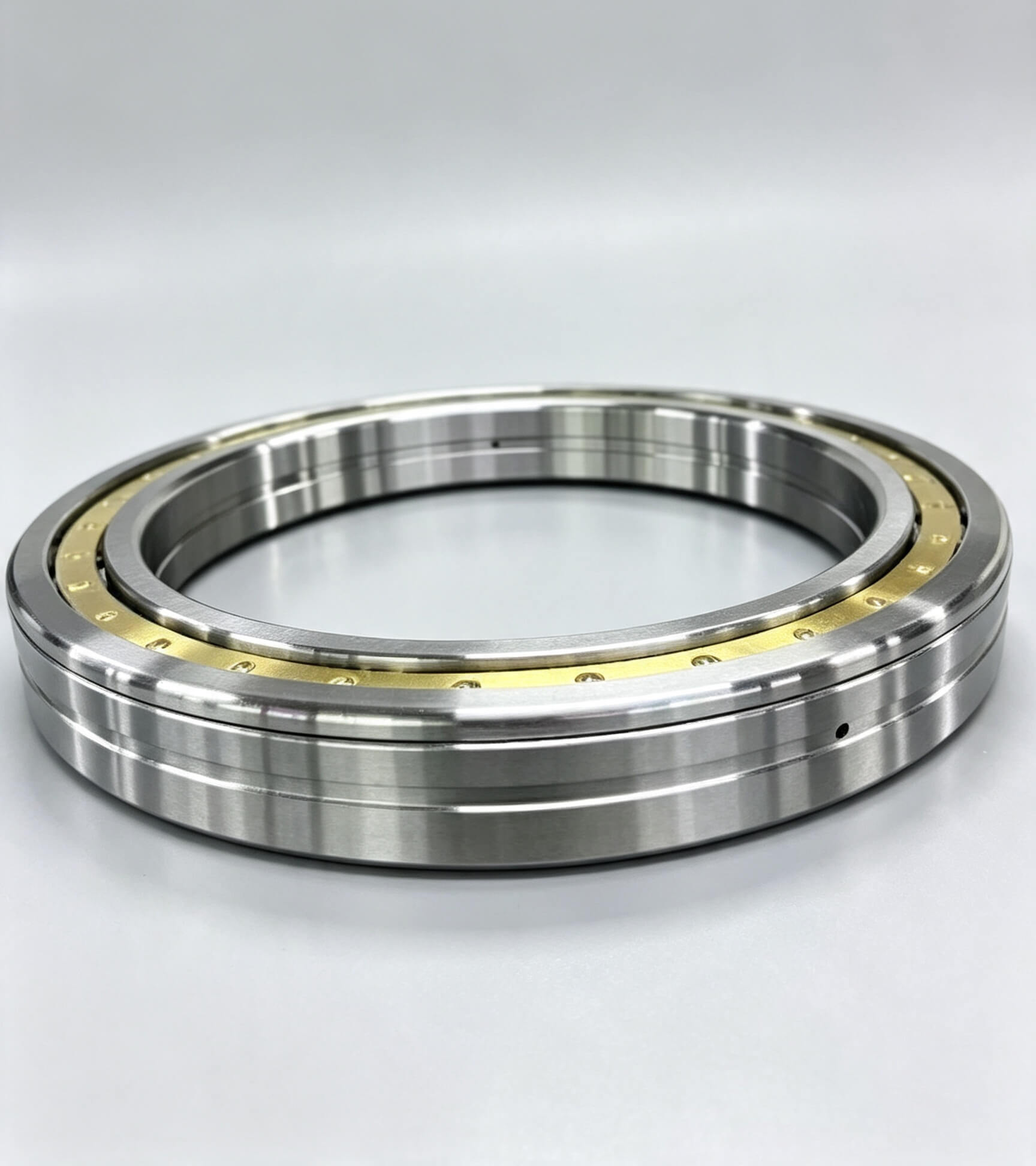
Unlike conventional cylindrical roller bearings, full‑complement units have no cage (or only very thin end‑face separator plates to prevent direct contact between adjacent rollers). Within the same envelope dimensions, the maximum possible number of largest‑diameter rollers can be fitted.
Comparison of key parameters
Standard caged bearing: roller count ≈ 60‑70 % of theoretical maximum.
Full‑complement cylindrical roller bearing: roller count close to theoretical maximum (typically > 95 %).
This delivers three major effects:
Sharp increase in total roller contact length → reduced contact stress.
Substantial improvement in radial stiffness → lower elastic deformation.
Elimination of the weak component‑‑the cage → removes cage‑related breakage, wear and seizure risks.
Specific Application Positions inside FRAC Pumps Full‑complement cylindrical roller bearings
In the power section of a typical FRAC pump, the crankshaft drives plungers via connecting rods. Crankshaft main journals and connecting‑rod big ends are the key mounting positions for cylindrical roller bearings.
Main‑journal bearings: Absorb combined radial loads from multiple connecting rods and tolerate minor shaft misalignment caused by shaft bending.
Connecting‑rod big‑end bearings: Suffer the most severe shock loads generated by plunger pressure and inertia forces. Operating conditions here are the harshest.
Full‑complement cylindrical roller bearings have already proven successful at both locations.
Especially on connecting‑rod big‑ends where peak loads are extremely high, conventional bearings often fail after several hundred operating hours, while full‑complement designs greatly extend overhaul intervals.
Detailed Key Advantages of FRAC Pumps Full‑complement cylindrical roller bearings
Advantage 1: Ultimate radial load capacity – performance under ultra‑high pressure
Thanks to the maximum number of rollers, full‑complement bearings offer 30‑50 % higher dynamic (Cr) and static (Cor) load ratings than caged bearings of identical dimensions. At the same FRAC pump discharge pressure, contact stress between rollers and raceways is lower, and fatigue life increases exponentially (for roller bearings, service life is proportional to (1/load)^(10/3)).
- Example:
A 2500‑hp FRAC pump originally used a caged NU2352 bearing on its connecting‑rod big‑end. Insufficient dynamic load capacity limited overhaul intervals to only 800 hours.
After replacement with a full‑complement bearing of identical outer dimensions (e.g. SL1853), dynamic load capacity rose by approximately 40 %, and actual service life increased to 2500 hours or more.
Advantage 2: Complete elimination of cage‑fracture risk – improved reliability
Cage damage is the most common cause of FRAC‑pump bearing failure in field operations:
Shock‑induced cage deformation: Pressure pulsations produce instantaneous accelerations; rollers strike cage windows, causing deformation, roller misalignment and seizure.
Cage wear under poor lubrication: Oil‑supply interruptions or contaminated oil cause heavy cage wear from friction against roller end‑faces. Wear debris enters raceways and triggers cascading failure.
Cage fatigue cracking: Cast‑iron or brass cages crack and break under prolonged alternating loads.
Full‑complement bearings contain no cage, so these failure modes are entirely eliminated. Even with temporary lubrication deviations, the oil film between rollers and minimal clearances permit continued operation, avoiding sudden seizure and crankshaft / connecting‑rod destruction.
Advantage 3: High stiffness – reduced crankshaft deflection
FRAC pump crankshafts (especially on 5‑plunger units) are long and bend under huge radial forces. Conventional bearings with large radial clearance or insufficient stiffness amplify shaft deflection, resulting in edge‑loading and premature raceway spalling.
With tightly packed rollers, full‑complement cylindrical roller bearings achieve 20‑30 % higher radial stiffness than caged equivalents. Benefits include:
Reduced shaft deflection, more uniform journal‑to‑bearing contact.
Better retention of the connecting‑rod‑to‑crank angle; reduced additional bending moments.
Lower sensitivity to housing bore misalignment (proper alignment remains essential).
Advantage 4: Shock‑load and acceleration resistance – high‑flow pulsation‑tolerant performance
Pressure pulsations on the hydraulic side of FRAC pumps are particularly intense under high‑flow conditions. They transmit to bearings as high‑frequency radial shocks. In full‑complement bearings, heavier‑mass rollers and numerous contact points efficiently absorb shock energy. Furthermore, the absence of a cage allows slight roller displacement during impact without generating secondary collisions.
Advantage 5: Compact footprint – space savings (beneficial for FRAC‑pump weight reduction)
Modern FRAC equipment targets higher power within existing envelope sizes. For instance, new 5000‑hp electric‑drive pumps must transmit greater torque in unchanged physical space. For a given outer diameter, full‑complement bearings deliver far higher load capacity. This allows either:
Higher nominal pump power without enlarging housing bores; or
Smaller bearing size while maintaining load capacity, thus lightening the pump assembly.
Advantage 6: Good lubrication adaptability
While sliding friction between rollers means full‑complement bearings demand slightly higher oil‑cleanliness and oil‑film formation requirements, modern FRAC pumps employ forced circulating lubrication with fine filtration which fully meets these demands.
Additionally, when lubrication systems suffer short‑term disruption, full‑complement bearings retain more oil volume within inter‑roller clearances than caged bearings and can tolerate brief dry‑run conditions.
Field Application Examples & Actual Results
| Application Condition | Bearing Type | Original Service Life | After Full Complement Retrofit | Improvement Factor | |
| 2500 hp pump connecting rod big end | Caged NU2352 | 800-1200 h | SL1853 (full complement) | 2500-3500 h | ~2.5× |
| 2000hp pump main journal | NJ2328 | 1500 h | SL1829 | > 4000 h | ~2.7× |
| 5 plunger pump connecting rod (high stroke frequency) | NCF2934 (full complement with locking feature) | — | > 5000 h failure free | — |
Selection & Operating Recommendations of FRAC Pumps Full‑complement cylindrical roller bearings
Despite clear benefits, several points must be considered when deploying FRAC Pumps Full‑complement cylindrical roller bearings:
Speed limit: The limiting speed of full‑complement bearings is approximately 50‑60 % of that for same‑size caged bearings. FRAC pump shaft speeds are typically below 400 rpm, which is completely safe. Separate validation is required for high‑speed pumps (e.g. centrifugal pumps).
Lubrication requirements: Oil cleanliness minimum NAS 7; viscosity ISO VG 220‑460 (EP‑additive oil). Forced circulating lubrication with magnetic filters is recommended.
Mounting clearance: Full‑complement bearings are normally fitted with positive clearance or minimal preload. For FRAC pumps, C3 or C4 clearance groups are commonly selected to compensate for crankshaft thermal expansion.
Axial positioning: Certain series (e.g. SL‑series) feature integral ring ribs. Correct axial positioning during assembly is mandatory to prevent roller skewing.
Matched bearing pairs: Two full‑complement bearings are sometimes mounted side‑by‑side on main journals to increase support width. Even load distribution is critical in such arrangements.
Conclusion
Thanks to ultimate load‑carrying capacity, cage‑free construction (high reliability), excellent stiffness and natural suitability for low‑speed high‑load regimes, full‑complement cylindrical roller bearings have become the benchmark solution for the power section of high‑flow high‑pressure FRAC pumps.
As the oil‑and‑gas industry continues to scale‑up fracturing operations and boost operational efficiency, full‑complement cylindrical roller bearings substantially extend FRAC‑pump overhaul intervals, reduce non‑productive time (NPT), and deliver direct economic benefits for oil‑service operators.
For FRAC‑pump OEMs, replacing conventional power‑section bearings with full‑complement cylindrical roller bearings means a relatively modest increase in component cost, yet a major improvement in overall machine service life and reliability.
Looking ahead, as ultra‑high‑pressure FRAC (20 000 psi and above) and electric‑drive FRAC pumps gain market traction, the scope of application for full‑complement cylindrical roller bearings will keep expanding.