In modern metallurgical strip processing lines, continuous production puts forward extremely high requirements for cutting equipment. Conventional stop and cut shears need to halt strip movement during every cut, creating bottlenecks for line speed, material yield and surface quality. Fly shear (flying shear) solves this core pain point: it performs cutting while the metal strip keeps running at line speed, synchronizing shear head motion with strip travelling speed to achieve on the fly cropping of sheets of preset length.
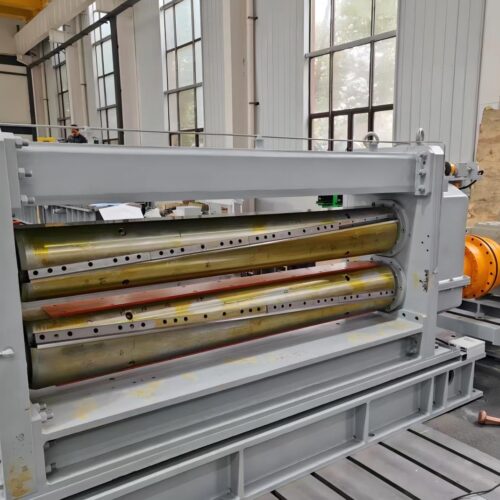
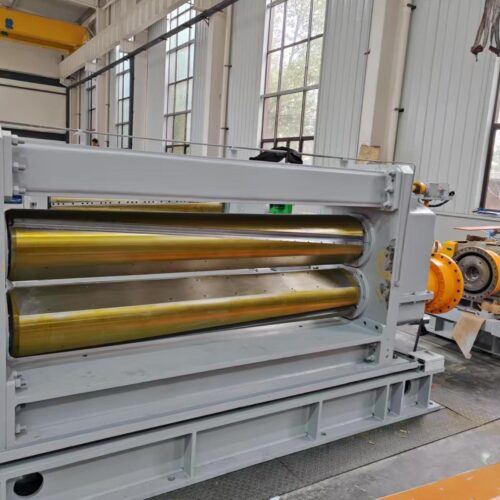
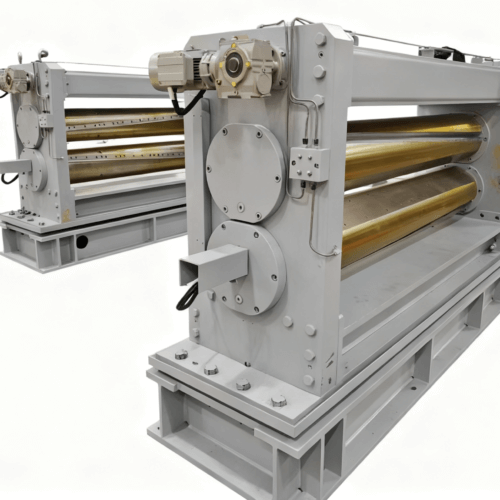
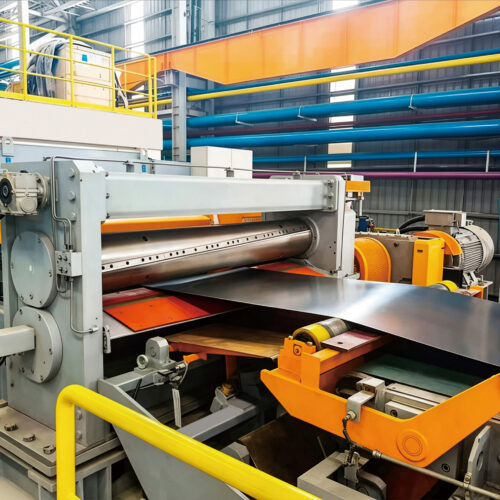
The equipment shown in the picture is a heavy duty mechanical fly shear unit assembled for thin metal strip processing, with paired rotary shear rollers, heavy duty welded frame and high torque servo driving unit, built for long term continuous operation in pickling lines, continuous galvanizing lines and slitting cut to length lines.
1. Working Principle of fly shear
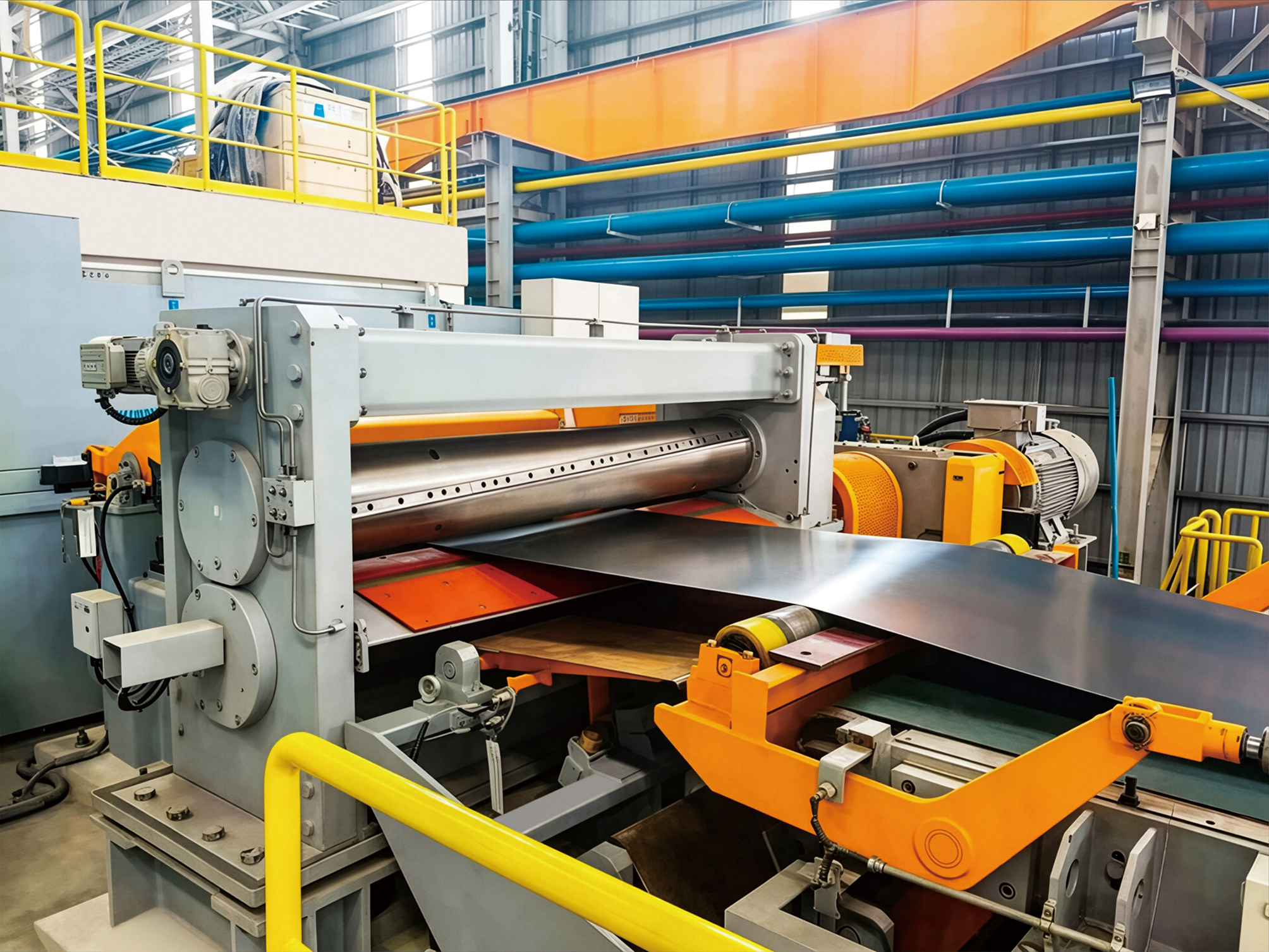
Fly shear adopts motion following cutting logic. As the strip continuously passes through the shear roller gap, the servo driven shear cart/rotary roller set accelerates to match the strip line speed. When speed synchronization is achieved, upper and lower shear blades engage to complete instant shearing. Immediately after cutting is finished, the shear unit decelerates and returns to home position, waiting for next cutting trigger signal. The whole cycle runs without stopping strip transport.
Rotary type fly shear (as pictured): two large diameter working rollers fitted with carbide shear blades; rotary movement realizes high frequency cyclic cutting, well suited for high speed thin gauge strip.
Key control loop: length measuring encoder → PLC motion controller → servo drive → shear roller position & speed closed loop feedback.
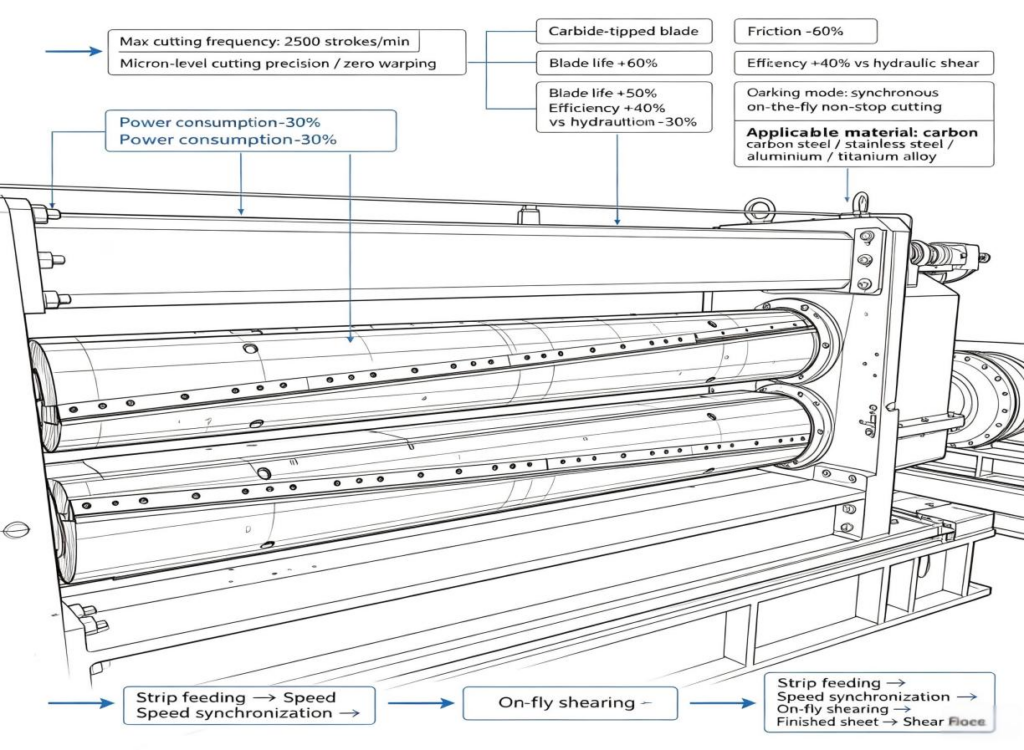
Mark all technical annotations on diagram:
- Max cutting frequency: 2 500 strokes/min
- Precision: Micron level, zero strip warping
- Blade material: Carbide tipped, friction reduction −60 %, service life +50 %
- Efficiency comparison: +40 % output vs hydraulic static shear; −30 % energy consumption
- Working mode: Synchronous on the fly cutting, strip non stop
- Applicable material:Carbon steel / SS / Aluminium / Titanium alloy
- Process flow mark: Strip feeding → Speed synchronization → On fly shearing → Finished sheet output → Shear unit reset
2.Key Performance & Technical Parameters
Cutting precision: Micron level cutting accuracy, no strip warping after shearing, compatible with stainless steel, aluminium, titanium alloy and carbon steel strips for high tolerance part production.
Cutting frequency: Max 2 500 strokes per minute; production efficiency 40 % higher than traditional hydraulic stop shears.
Energy performance: 30 % reduction of power consumption vs conventional hydraulic shear solutions.
Wear resistance: Carbide tipped shear blades with proprietary heat resistant surface coating, blade service life extended by 50 %. Optimized blade surface treatment reduces cutting friction coefficient by 60 %, lowering strip surface scratch risk.
Smart functions: Real time operational data collection, blade wear predictive maintenance warning, remote parameter adjustment, centralized production dashboard.
Material range: carbon steel, stainless steel, aluminium alloy, titanium alloy; applied in automotive body panel blanking, aerospace titanium sheet cropping, construction roofing steel sheet and structural steel processing.
3.Operating Condition Diagram Specification
- Heavy duty welded machine base & main frame
- Upper rotary shear roller (with installed carbide segment blades, blade mounting holes as in photo)
- Lower rotary shear roller, aligned to upper roller
- Continuous incoming metal strip (thin sheet, running from left to right)
- High torque servo hydraulic drive unit on right side
- Inlet strip guide mechanism
- Applicable material: Carbon steel / SS / Aluminium / Titanium alloy Process flow mark: Strip feeding → Speed synchronization → On fly shearing → Finished sheet output → Shear unit reset
4.Practical Advantages in Production Lines
Many factories still rely on static hydraulic shears: every cut requires line deceleration stop cut restart. Frequent start stop brings multiple losses: lower actual line speed, strip tension fluctuation, edge wave and material waste at stopping points.
Fly shear eliminates line stops during cutting. Combined with predictive maintenance function, it monitors blade dulling status online. Operators can adjust target cut to length, shear gap and line speed remotely without local machine shutdown. The specially treated blade surface greatly decreases friction scratch on strip surface — critical for surface sensitive products such as automotive exterior panels and aerospace thin sheets.
5.Industrial Application Scenarios
Automotive manufacturing: High volume precision cutting for car body panels and chassis component blanks; stable dimensional tolerance for downstream stamping processes.
Aerospace industry: Processing titanium alloy thin sheets for turbine related components; high precision shearing avoids post cut flattening correction work.
Construction material production: High speed cutting of roofing steel sheets, light steel structural blanks; improves finished output while lowering unit energy cost.
Conclusion
Fly shear represents a key upgrade for continuous metallurgical processing lines. Its core value lies not only in higher cutting speed, but in the whole process stability: maintaining strip tension integrity, protecting strip surface quality, bringing smart predictive maintenance into traditional heavy duty equipment. For enterprises pursuing higher yield, lower operating cost and consistent product quality, fly shear is a worthy core equipment investment for strip processing modernization.
Inquiry: Welcome to contact us for customized model selection and technical parameter confirmation.https://www.ascon.com.cn/
Topics You may Be Interested In: