- Newsletter
- Shanghai Jundong Info Tech Co.,LTD

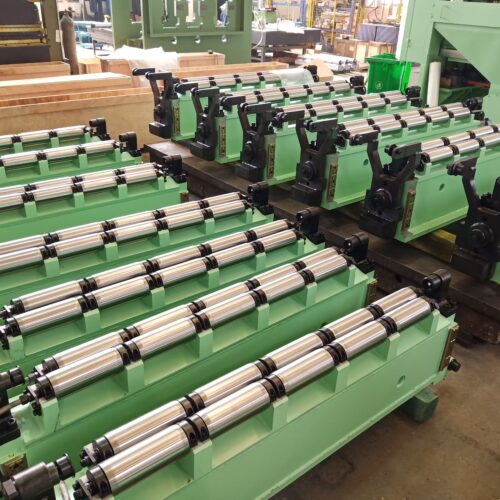
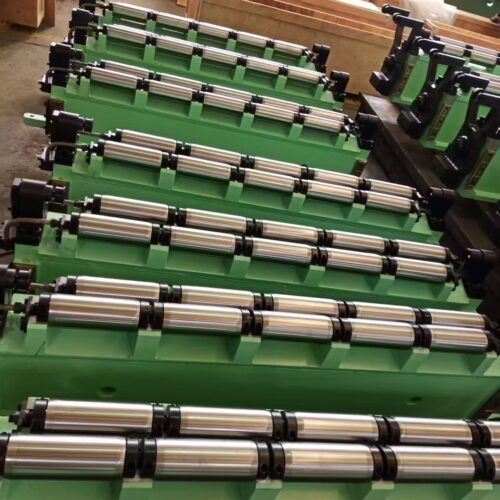
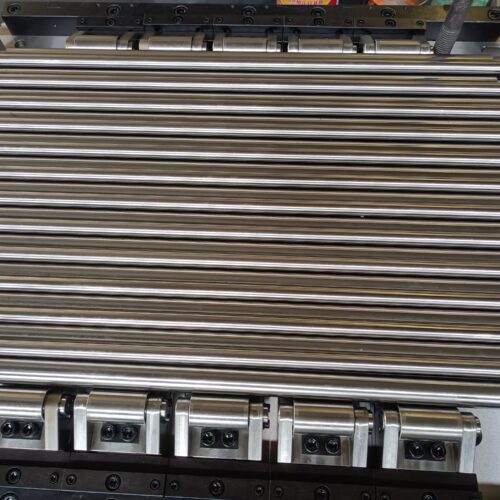
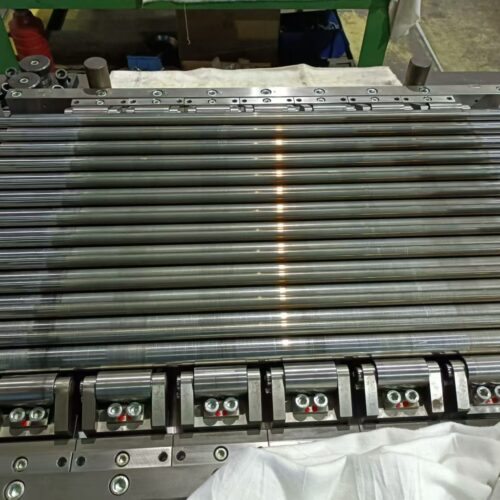
At its heart, a roll cassette is a pre-assembled, interchangeable module that contains the complete set of upper and lower work rolls (the leveling rolls that directly contact the metal) and their immediate housings. Traditionally, changing work roll diameters to process different materials required a lengthy, complex teardown. With the cassette system, this becomes a rapid, plug-and-play operation.
The most advanced design, exemplified in several patents, takes this a step further by featuring common (or fixed) backup rolls. Here’s how this key innovation works:
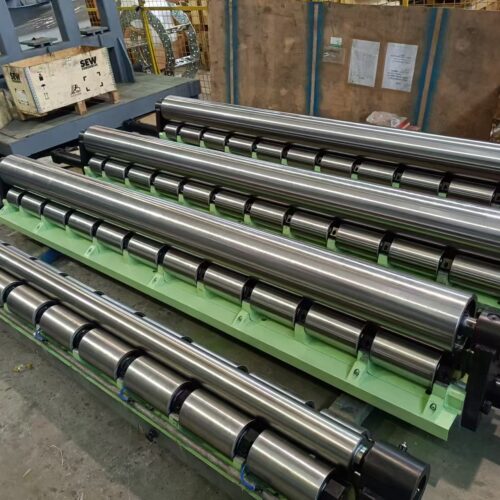
Separate Functions: In this design, the work rolls and backup rolls are decoupled. The cassette contains only the work rolls, while a separate, permanent bank of robust backup rolls remains installed in the machine frame.
How It Switches: To install a cassette with a different work roll diameter, the backup roll housing is unlocked, slightly lowered, and shifted horizontally by about half a roll pitch. This repositions the backup rolls to properly support the new, differently sized work rolls. The new cassette is then slid into place.
This separation is a major advancement over older “cartridge” systems, where the backup rolls were part of the removable unit, making them heavier, more expensive, and slower to change
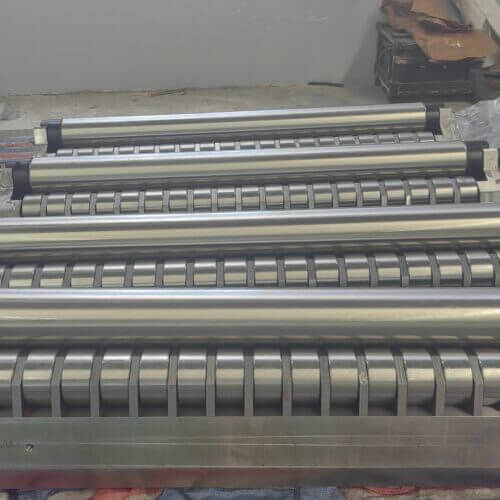
Roll cassettes
Transform your tension leveler into a versatile production tool with modular roll cassette systems.
A roll cassette is a pre-assembled, interchangeable module containing the work rolls. The advanced design features common (fixed) backup rolls that remain in the machine frame. To change, the backup rolls shift slightly, allowing a new cassette to slide in. This is faster and more cost-effective than traditional cartridge systems.
Select the system that best matches your production profile:
| Configuration Type | Best Application For | Key Consideration |
|---|---|---|
| Standard Tension Leveler | General purpose flattening of a wide range of strip materials. | The classic, high-performance workhorse for most applications. |
| Cassette System with Common Backup Rolls | Lines that process a very wide variety of thicknesses/grades and require minimal changeover time. | Maximizes flexibility; ideal for job shops or multi-product facilities. |
| "Six-High" Cassette System | Premium surface-sensitive materials (e.g., polished stainless, automotive exterior). | Intermediate rolls protect work rolls from marking the strip; higher initial cost. |
| Hybrid Roller/Tension Leveler | Facilities needing both heavy flattening (roller) and precision flattening with tension. | Ultimate versatility from a single machine platform. |
When evaluating a roll cassette system, ensure it meets these critical points:
The roll cassette system is a strategic investment that converts a fixed-capability machine into a flexible, adaptive production asset. It directly addresses core manufacturing challenges: product variety, changeover speed, and operational cost. By enabling rapid optimization for every job, it enhances both quality and long-term competitiveness.