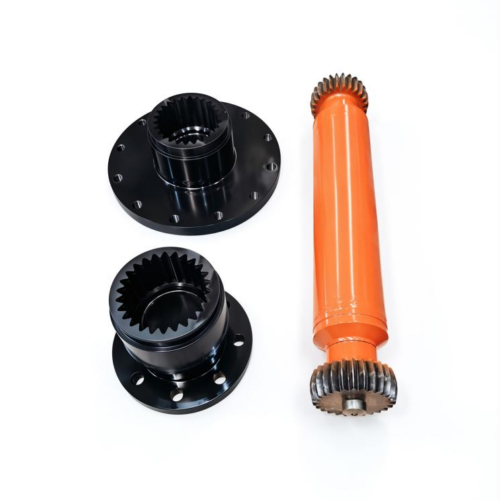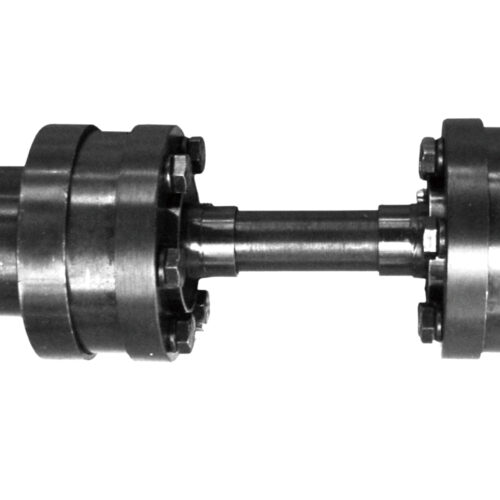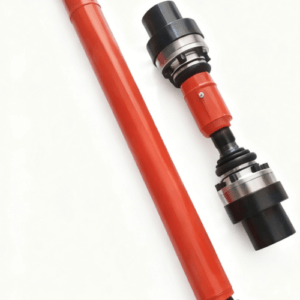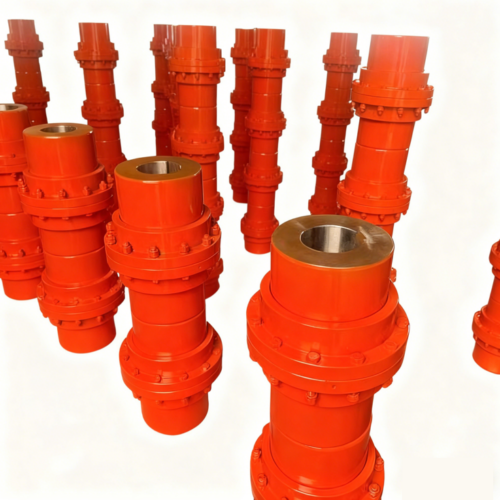


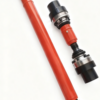
1. Ball‑Cage CV Joints Overview

Metallurgical production lines (steel making, continuous casting, hot/cold rolling, non-ferrous processing) operate under harsh conditions of high temperature, dynamic shaft deflection, continuous high-speed operation and alternating impact loads. Traditional cross universal joints suffer from non-constant velocity transmission, causing equipment vibration, strip defects, premature component failure and frequent unplanned downtime.
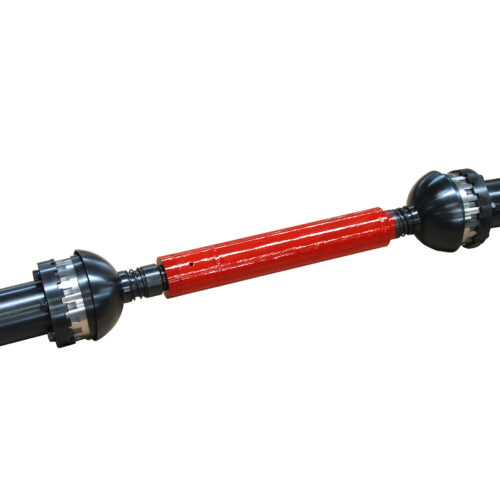
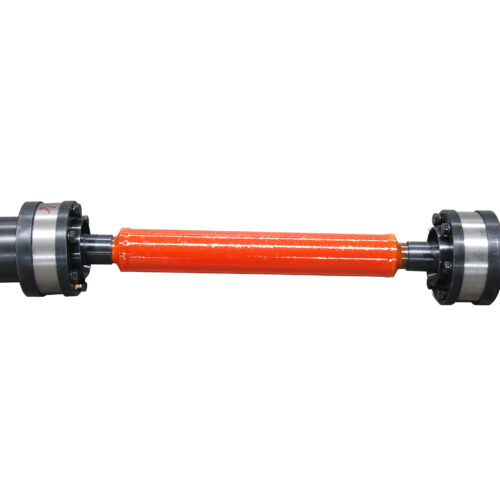
Our BJ, DOJ and BC series ball-cage CV joints are engineered for heavy-duty metallurgical and industrial machinery. Featuring a six-ball load-sharing structure, precision-machined raceways and high-reliability sealing, these joints deliver stable constant-velocity transmission, serving as a high-performance upgrade to conventional cross universal joints.
2. Core Technical Advantages
Compared with ordinary cross universal joints, our ball-cage CV joints provide comprehensive performance upgrades tailored for metallurgical working conditions:
2.1 Stable Constant-Velocity Transmission
The symmetric ball-cage structure eliminates speed pulsation under angular deflection, avoiding roll chatter, strip wave patterns and burr defects to stabilize finished product accuracy.
2.2 High Precision & Low Vibration
IT4-grade precision ground raceways and G2.5 dynamic balancing prevent high-speed resonance, reducing abrasion and failure of reducers, bearings and transmission parts.
2.3 Strong Environmental Adaptability
Multi-type structural coverage adapts to shaft deflection and thermal expansion of rolling equipment. High-temperature fluororubber sealing resists oxide scale, cooling water and rolling oil, preventing corrosion and seizure.
2.4 Higher Load Capacity & Longer Service Life
Synchronized six-ball load sharing boosts bearing capacity by 50%–100%. Carburizing and quenching heat treatment delivers excellent wear and impact resistance, with a field service life 2–3 times longer than traditional joints.
2.5 Low Maintenance & Good Interchangeability
Modular serialized design supports direct replacement of imported products. Fewer vulnerable components reduce daily maintenance frequency and long-term operational costs.
3. Full Series Model Specifications & Applications of Ball‑Cage CV Joints
3.1 Fixed Disc Type (BJ75D–BJ300D)
- Angle Range: 14°–18°
- Features: Rigid disc flange structure without sliding spline shaft, zero sliding friction, high rigidity and superior high-speed stability.
- Applications: High-speed cold rolling mills, finishing mills, rotary slitters and precision levelers with minor shaft deflection and no axial displacement.
- Value: Eliminates high-speed vibration and speed fluctuation, ensuring high precision for thin-gauge and high-strength steel production.
3.2 Fixed Cup Type (BJ75C–BJ225C)
- Angle Range: 25° (max in series)
- Features: Fully enclosed cup-shaped housing with double-layer heavy-duty sealing, offering ultra-large angular compensation and excellent dust/water/high-temperature resistance.
- Applications: Hot roughing mills, continuous casting levelers, hot-dip galvanizing lines and heavy-duty non-ferrous rolling mills.
- Value: Replaces double cross-joint assemblies, greatly reducing raceway wear and failure rates in high-temperature and heavily polluted hot rolling environments.
3.3 Medium Sliding Flange Type (DOJ68F–DOJ200F)
- Angle Range: 20°, with axial telescopic compensation
- Features: Low-friction sliding raceway enables synchronous compensation of angular deflection and thermal axial displacement without jamming.
- Applications: Reversing rolling mills, uncoilers, recoilers and medium-plate levelers.
- Value: Integrates angle and telescopic compensation, simplifying traditional “cross joint + spline shaft” structures and reducing oil leakage and seizure faults.
Figure 4: Model–Dimensional Parameters Table
(Kindly Reminder : All dimensional drawings shown are for general reference purpose. Actual overall dimension, flange parameters, torque rating and telescopic stroke shall be subject to official technical datasheet. Custom modification is supported according to mill site installation constraints.)
3.4 Heavy-Duty Sliding Flange Type (DOJ225F–DOJ625F)
- Angle Range: 8°–10°, heavy-load long-stroke telescopic
- Features: Reinforced widened raceway improves torque capacity and impact resistance, maintaining stable telescopic performance under ultra-heavy loads.
- Applications: Heavy-plate hot rolling mills, large aluminum/copper non-ferrous mills and heavy metallurgical feeding equipment.
- Value: Solves common fracture and roller fragmentation failures of traditional heavy-duty cross joints under severe impact loads.
3.5 Integrated Coupling Type (BC68–BC200)
- Angle Range: 5°
- Features: Pre-balanced integrated structure of joint and intermediate shaft, requiring no precise on-site alignment for fast installation.
- Applications: Metallurgical roller tables and compact auxiliary transmission equipment with minor installation deviation.
- Value: Shortens maintenance replacement time, reduces operational noise and extends supporting bearing service life.
4. Engineering Selection Reference Table
| Product Series | Max Angle | Core Performance | Typical Equipment | Key Advantages |
| BJ75D-BJ300D (Fixed Disc) | 14°–18° | High-speed rigid transmission | Cold mill, rotary slitter | Vibration-free high-speed operation, higher strip precision |
| BJ75C-BJ225C (Fixed Cup) | 25° | Large-angle compensation + heavy sealing | Hot mill, CC leveler, HDG line | Replaces double cross joints, 70%+ wear reduction |
| DOJ68F-DOJ200F (Medium Sliding) | 20° | Angle & axial dual compensation | Reversing mill, coiler | Simplifies transmission structure, lower failure risk |
| DOJ225F-DOJ625F (Heavy-Duty Sliding) | 8°–10° | High torque + long-stroke telescopic | Heavy-plate hot mill | Strong impact resistance, anti-fracture performance |
| BC68-BC200 (Integrated Coupling) | 5° | Low deviation adaptation, fast installation | Roller table, auxiliary drives | Time-saving installation, low noise & maintenance |
5. Quick Selection Guidelines
– BJ-D: For high-speed cold rolling and precision finishing lines requiring stable transmission.
– BJ-C: For hot rolling, continuous casting and high-pollution thermal processing lines.
– DOJ Medium Sliding: For reversible mills and coilers needing dual angle and thermal displacement compensation.
– DOJ Heavy-Duty Sliding: For high-torque heavy-plate and large non-ferrous rolling equipment.
– BC Integrated Type: For roller tables and compact auxiliary metallurgical transmission systems.
6. Conclusion
Our full-series ball-cage CV joints solve the core defects of traditional cross universal joints, featuring stable constant-velocity performance, strong environmental adaptability, high load capacity and long service life. Suitable for full-scene steel and non-ferrous metallurgical equipment, they provide reliable, cost-effective transmission upgrade solutions for heavy-duty industrial production lines.
- Topics You may Be Interested In:
- CV Joints
- Work Roll
- Tension Leveler
- Multi-roll Leveler
- Roll coater