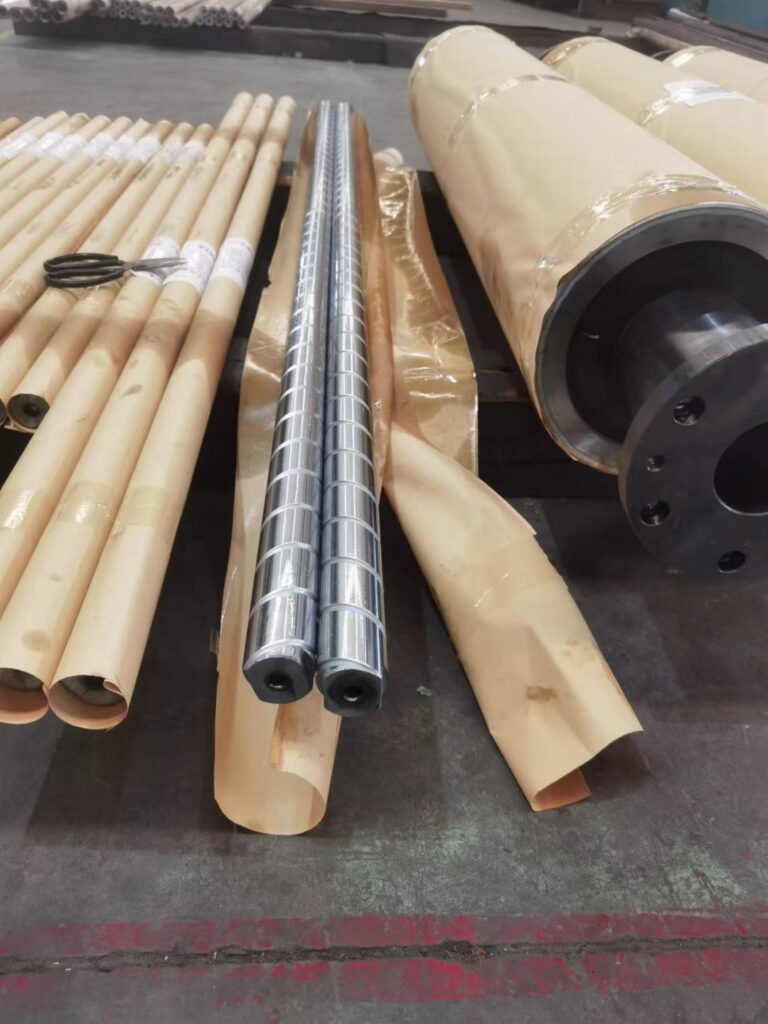
Leveller Cassette Working Rolls Key Parameters You Need to Check When Purchasing
All technical data, performance indicators are strictly extracted from your product document, no fictitious parameters.
Leveller cassette working rolls act as the core functional components of cassette-style levelling equipment, directly determining levelling accuracy and the surface quality of finished metal strips. Selecting improper working rolls will trigger strip scratches, flatness defects, frequent roll replacement and unexpected production downtime.
When sourcing leveling cassette working rolls for your metal strip processing line, you must verify a series of critical technical parameters before placing orders. This article sorts out all essential indicators based on the standard specifications of high-performance leveling cassette working rolls.
- Standard Working Roll Diameter Specifications
Size compatibility is the first factor to confirm. Qualified industrial precision leveling cassette working rolls are supplied in mainstream standard diameters:
Ø30mm, Ø45mm and Ø70mm.
These standard dimensions match most existing levelling cassette structures on the market. Confirm whether the roll outer diameter fits your cassette housing before procurement to guarantee assembly and interchangeability.
- Material & Hardness Index
Material and heat treatment directly decide wear resistance and service life.
- Raw material: High-grade alloy steel and premium tool steel
- Surface hardness: HRC 58–62+
- Feature: Deep and uniform hardened layer
Rolls reaching this hardness standard deliver outstanding resistance to wear and indentation under continuous levelling loads. Avoid low-hardness rolls; they deform easily and leave indent marks on metal strips.
- Machining Precision & Surface Finish
Precision control determines whether sensitive strips can avoid surface damage.
Dimensional tolerance: Machined to micron-level tolerances
Geometric indicators: Excellent cylindricity and coaxiality
Surface finish: Mirror-like surface
This precision is vital for processing sensitive materials including aluminum strips, copper strips and polished stainless steel strips. Poor surface finish will cause permanent scratches and marking defects on strip surfaces.
- Mechanical Performance for Load Bearing
Tension levelling operates under high specific pressure. You should confirm the roll structural design is optimized to sustain continuous heavy loads.
Qualified working rolls can maintain stable geometric integrity under long-term high-speed operation. Once the roll loses dimensional accuracy under load, inconsistent levelling flatness will occur batch by batch.
- Interchangeability & Dimensional Tolerance
Check whether the manufacturer implements strict full-process quality inspection and dimensional calibration.
Premium leveling cassette working rolls maintain unified assembly tolerances and are fully interchangeable with original standard leveller cassettes. Interchangeable rolls support quick installation without extra modification or debugging, effectively shortening equipment maintenance time.
- Comprehensive Service Life & Cost Performance
Service life depends on three combined factors: premium raw materials, standardized heat treatment and precision cylindrical grinding.
High-quality working rolls extend operation cycles, reduce frequent roll change downtime and lower overall maintenance costs. When comparing suppliers, do not only focus on unit price; evaluate total cost of ownership based on service life and downtime loss.
- Applicable Processing Materials
Confirm if the working roll fits your processing materials:
The leveling cassette working rolls are suitable for various metal strips, widely adopted in processing aluminum, copper, stainless steel and other metal materials.
- Matching Industry Scenarios
Verify suitability for your production sector. Reliable leveling cassette working rolls serve:
Steel service centers, metal processing factories, automotive manufacturing, home appliance production and aerospace industries.
Conclusion
When purchasing leveller cassette working rolls, systematically check roll diameter, material hardness, machining precision, surface finish, load resistance, interchangeability and applicable processing materials.
Working rolls meeting the above specifications can deliver stable strip flatness, flawless surface quality, fewer equipment overhauls and longer service life.
If you require customized sizes or formal technical data sheets of leveling cassette working rolls, contact us for further consultation.
Welcome to inquire about quotations and personalized customization services.