
Cam Follower Bearing
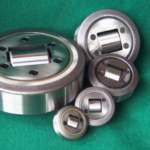
A cam follower bearing features an outer ring made of a full-complement cylindrical roller bearing with a thickened outer wall. The outer diameter surface of the roller is available in cylindrical and crowned profiles, and can be designed to match the raceway surface according to the application.
1.Structure of Cam Follower Bearing
The outer ring of a cam follower bearing is made of a full-complement cylindrical roller bearing with a thickened outer wall. The outer diameter surface of the roller is available in cylindrical and crowned profiles, and can be designed to match the raceway surface according to the application. With this outer ring, the roller can roll directly on the raceway and can withstand heavy loads and impact loads. The bearing is of a sealed structure, filled with grease, providing long-term effective lubrication, and the user can operate without additional lubrication. For harsh operating conditions, a grease replenishment channel can be designed to improve the service life of the bearing.
Improper methods can also cause the cam follower bearing to overheat. Lubrication can reduce wear during the movement of parts, ensure press precision, and reduce energy consumption. Lubrication includes thin oil lubrication, thick oil lubrication, etc.
2.Composition of Combined Cam Follower Bearing
1) Main Roller
The main roller is the most important load-bearing component in a composite roller assembly. It mainly bears vertical loads and impact loads, and has strong impact resistance, wear resistance, and corrosion resistance. Since the main roller is a full-complement roller bearing, it can also be used alone as a one-way bearing.
2) Side Roller
The side roller is the second load-bearing component in a composite roller assembly. It mainly bears horizontal loads and also has strong impact resistance, wear resistance, and corrosion resistance. The side roller is designed as a full-complement needle roller without an inner ring, with a mandrel replacing the inner ring and connecting to the shaft head for load bearing.
3) Shaft Head
The shaft head is the part that connects the composite roller to the machine equipment. The head of the shaft head is usually designed with a chamfer for easy installation. The shaft head can be directly welded to the equipment, or welded to a connecting plate with a round hole, and then the connecting plate and equipment are assembled.
4) Cover Plate
The cover plate is an important component that fixes the side roller installed inside the shaft head and the main roller outside the shaft head together at the tail of the shaft head using nuts and thread-locking adhesive.
3.Installation
Clean the bearing with kerosene, press it into the bearing housing, fill the roller area of the outer ring with Shell No. 3 lithium-based grease to two-thirds full, apply evenly with clean hands, install the bearing cover, and tighten the bearing cover with fastening bolts coated with bolt anti-loosening adhesive;
The bearing is a cylindrical roller bearing with separable inner and outer rings. The inner ring should be mounted on the rotating shaft in place;
Install the bearing housing on the machine casing. If there is a grease injection hole, it must be aligned. Tighten the bearing housing with fastening bolts coated with bolt anti-loosening adhesive;
Install the inner and outer eccentric blocks on the rotating shaft in place. If there is a shaft key, install the shaft key into the keyway before installing the outer eccentric block, and install the shaft retaining ring on the rotating shaft;
Tighten the eccentric block fastening bolts, rotate the adjustable eccentric block to the angle position before removal, and tighten its fastening bolts. After the above assembly is completed, the rotating shaft should have a certain axial play;
Install the protective covers at both ends of the vibration motor and tighten with screws.
4.Maintenance
Thin Oil Lubrication:
Advantages: Low internal friction coefficient, so less energy is consumed to overcome friction. Thin oil has good fluidity and easily enters the friction surfaces of various lubrication points. It has a good cooling effect and can carry away impurities adhering to friction surfaces and metal particles generated by grinding.
5.Applications
Metallurgy, mining, material processing, cement, forklifts (main/side rollers), conveyor systems, sliding forks, pallet changers, power generation and food-processing transfer lines, and other precision equipment.
- Topics You may Be Interested In:
- Bearing
- CV Joints
- Cylindrical roller wheel
- Full-Complement Cylindrical Roller