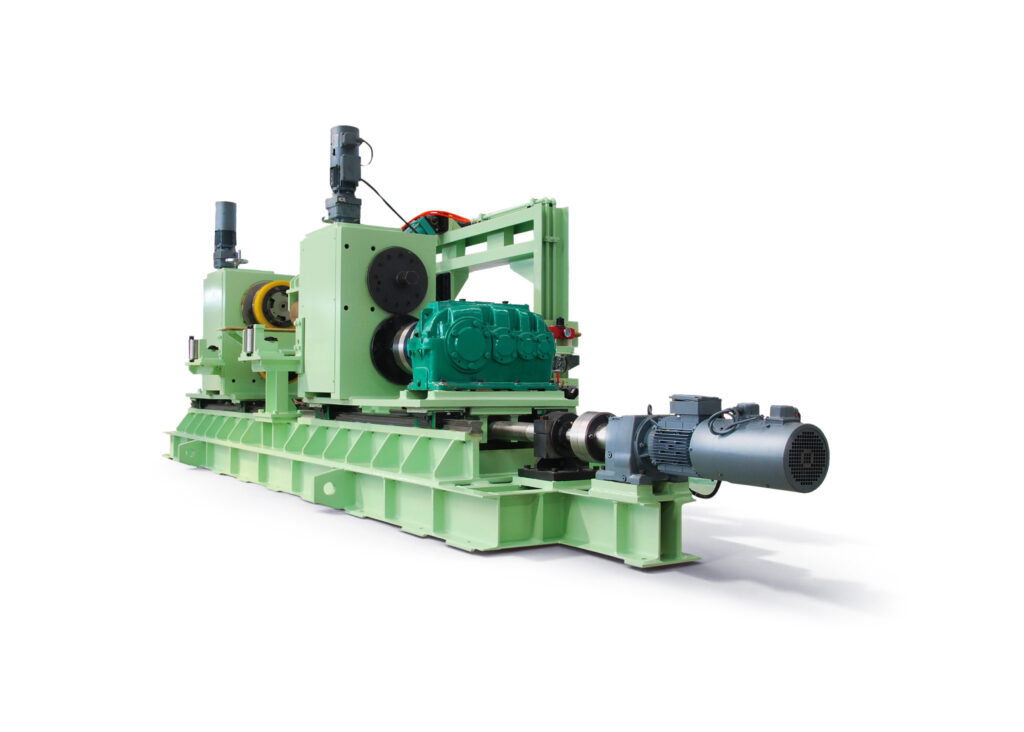
JSW Steel Coated Products Ltd. has awarded a contract to John Cockerill India Limited to build a cold rolling complex with an annual capacity of approximately 600,000 tons in Rajpura, India, scheduled for completion in 2028. The project includes a semi-continuous pickling line, a 6-high double-stand cold rolling mill, and a continuous galvanizing line. The pickling line runs at 200 mpm and is equipped with six pickling tanks and a turret-type side trimmer. For strip steel, the Side Trimmer is not an isolated piece of equipment but a three-gate edge trimming process that runs through pickling, rolling, and galvanizing.
Pickling Line: The First Gate — Removing Hidden Defects
Hot-rolled incoming strip is covered with oxide scale, and its edges often carry cracks, burrs, and waviness. The task of the side trimmer in the pickling line is to cut off edge defects and maintain consistent width. During pickling, the oxide scale on the strip edges is difficult to remove completely. If edge trimming is not completed before galvanizing, the edges will not be properly galvanized, potentially leading to poor zinc adhesion.
Therefore, the pickling line side trimmer undertakes the task of “removing hidden defects.” The turret-type design allows rapid knife changes without stopping the line, matching the continuous high-speed rhythm of the pickling line. Practice at WISCO’s new energy CP7 pickling line side trimmer shows that the equipment can handle high-grade silicon steel with thicknesses of 1.6–2.6 mm, and both shearing speed and minimum edge trim amount have reached industry-leading levels.
Cold Rolling Mill: The Second Gate — Width Precision
After entering the cold rolling process, the strip surface is already clean, but thickness reduction and work hardening make the edges more sensitive. The positioning of the side trimmer in the cold rolling mill shifts from “cutting clean” to “cutting accurately.” Parameters such as knife disc clearance and overlap must match the rolling force and tension system.
In most pickling and rolling workshops, the edge trimming shear used is a tower-type non-driven side trimmer, with a designed edge trimming capacity of 5–50 mm per side. The matching relationship between blade clearance and strip material strength and thickness directly determines edge trimming quality. If edge trimming dimensional errors are not properly controlled, at best they affect finished product width tolerance, and at worst they cause edge cracks in subsequent rolling. The cold rolling mill in the JSW project can run at a maximum speed of 1500 mpm and roll high-strength steel with tensile strength up to 800 MPa, placing higher demands on the rigidity and dynamic precision of the side trimmer.
Galvanizing Line: The Third Gate — Surface Quality
The galvanizing line is the final edge trimming process after the strip leaves cold rolling, and it is also where the side trimmer has the strongest presence. Galvanized products directly serve high-end markets such as automotive sheets and appliance sheets, with extremely stringent requirements for edge quality. Maanshan Iron & Steel’s No. 6 cold rolling galvanizing line is positioned for high-end wide automotive galvanized sheet, and its key shearing section adopts a double-tower side trimmer and scrap chopper system.
As critical equipment in the galvanizing line, the side trimmer’s performance directly relates to product precision and production efficiency. In the galvanizing process, the side trimmer must not only ensure width precision but also avoid defects such as burrs and folded edges. Any edge defect will be magnified after subsequent zinc coating and become an irreparable finished product defect. Improper adjustment of shearing parameters and non-standard knife head replacement will directly cause poor edge trimming and affect the first-pass yield of the main line.
From Three Gates to One Continuous Gate
The side trimmer is moving from “three independent gates” to “one continuous gate.”, and it has been applied in pickling lines and galvanizing lines.
This means the side trimmer is no longer just a piece of equipment passively performing edge trimming tasks, but an active process node participating in line rhythm control. After the JSW Rajpura project is commissioned in 2028, how the turret-type side trimmer on the pickling line will echo the edge trimming strategies in the cold rolling and galvanizing processes deserves continued attention.
ASCON Side Trimmer Adaptability Across Production Lines
In the manufacturing and supply system for side trimmers, international brands have long occupied the high-end market, while domestic metallurgical equipment enterprises have also been continuously catching up. ASCON is likewise positioned in this equipment category, and its side trimmer products have differentiated considerations in structural design and process adaptability for the needs of different production lines.
For pickling line conditions, our side trimmer design focuses on stability and blade life under high-speed shearing, adapting to the characteristics of continuous operation and incoming strip with surface oxide scale. The equipment supports turret-type or double-tower structural configurations, facilitating rapid online knife changes and reducing downtime. For cold rolling lines, our side trimmers are strengthened in knife disc clearance adjustment precision and rigidity to meet the edge trimming precision requirements of high-strength steel and thin-gauge strip, and shearing parameters can be specifically matched according to material thickness and strength.
For galvanizing lines, ASCON places greater emphasis on the stability of edge quality after shearing, with structural optimizations to avoid defects such as burrs and folded edges, while supporting online adjustment and non-stop process changes to adapt to scenarios with high surface quality requirements such as automotive sheets and appliance sheets.
ASCON’s product line covers side trimmers, scrap choppers, and other metallurgical equipment and spare parts. It can provide customized solutions according to specific line configurations and material types, flexibly adapting from single-tower to double-tower structures. For the complete strip process from pickling to cold rolling to galvanizing, we can provide integrated edge trimming equipment solutions to help users maintain consistency in edge trimming strategies across different processes.
- Topics You may Be Interested In:
- Side trimmer
- Fly shear
- Scrap chopper
- Scale breaker