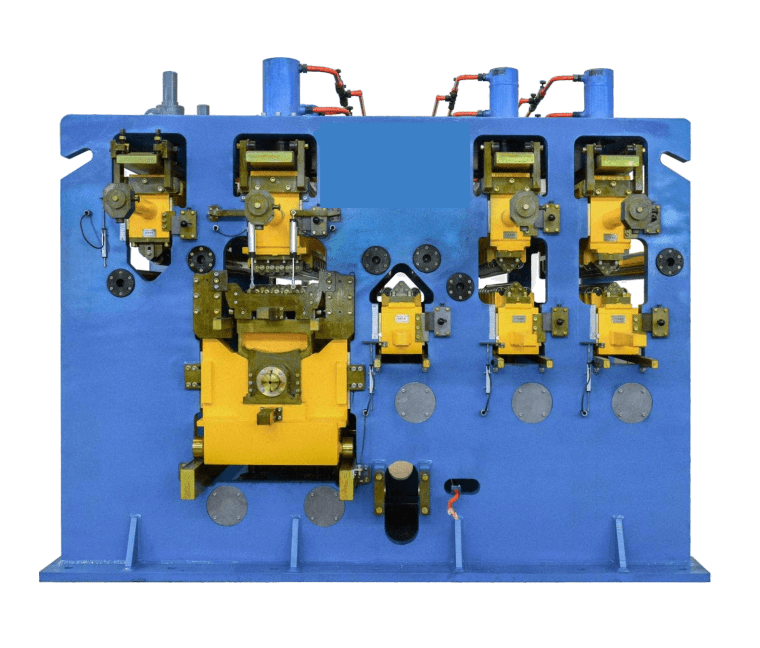
Plant managers and metallurgical procurement teams engaged in continuous galvanizing and annealing projects are frequently faced with a core equipment decision when sourcing strip‑flatness improvement units: choosing between a Stretch‑Leveler built around wet‑operated architecture and an equivalent dry‑operated Stretch‑Leveler. Both dual‑bending dual‑levelling configurations are capable of correcting incoming strip flatness from 30‑50 I down to qualified 3‑5 I for wide thin‑gauge coils, yet operational differences will directly influence surface quality, roll service life, line running speed and long‑term operating expenditure over the equipment lifecycle.
As highlighted in GalvInfoNote industry research, surface cleanliness remains one non‑negotiable evaluation index for galvanizing‑line equipment. A wet‑operated Stretch‑Leveler relies on circulating process fluid to deliver continuous roll‑surface lubrication and in‑process cooling throughout high‑load levelling cycles. This circulating medium dissipates frictional heat generated by repeated bending‑tension deformation between work rolls and strip material, effectively lowering roll‑wear risk during long‑duration heavy‑duty production.
For wide‑format strip ranging from 650 mm to 2700 mm with material thickness between 0.15 mm and 4.0 mm, the lubrication advantage makes wet‑operated units well‑suited for scenarios with heavy friction stress, processing soft‑state and semi‑soft carbon steel, cold‑rolled carbon steel, stainless steel as well as aluminum strip. Nevertheless, the same process fluid brings inherent trade‑offs. Residual liquid carried away by strip may introduce hidden contamination risks for subsequent galvanizing coating, if downstream cleaning sections are insufficiently configured.
According to practical cases documented in Chinese Journal of Metallurgy, fluid residue will interfere with air‑knife working conditions and trigger local coating unevenness when cleaning capacity cannot match line throughput.There is no risk of liquid residue adhering to strip surface, which removes extra burden for downstream cleaning segments and fits production workflows with strict surface‑cleanliness requirements. However, lacking fluid cooling, roll‑surface friction heat accumulates faster under continuous heavy‑load conditions, demanding stricter roll‑material selection and regular roll‑grinding maintenance schedules for wide‑coil production.
Material portfolio and finished‑product positioning should govern your final model evaluation. Wet‑operated design delivers greater value for production lines permitting limited liquid contact on strip surfaces. Typical applicable workflows include continuous hot‑dip galvanizing lines equipped with complete post‑levelling cleaning tanks, tension levelling and recoiling lines, as well as tin‑plating production lines. In these circumstances, the cooling‑lubrication feature maximizes roll service life when you frequently process wide stainless‑steel or aluminum coils with high surface‑friction tendency.
On the other hand, dry‑operated dual‑bending dual‑levelling units become more preferable for color‑coating lines and high‑end galvanizing projects where zero residual‑contamination is mandatory, even though you will accept higher roll‑maintenance frequency under heavy‑load running.
Both wet‑type and dry‑type Stretch‑Leveler offer the optional hydraulic roll‑change assembly. For metallurgical plants switching frequently among diverse material grades and strip dimensions, this optional configuration enables swift roll replacement. It cuts unplanned production downtime substantially and avoids surface scratch or assembly misalignment brought by manual roll‑changing workflows. Whether you deploy wet‑operated or dry‑operated hardware, this auxiliary module brings tangible throughput improvement for high‑volume continuous‑processing projects.
When reviewing technical specifications for your new‑build or revamped production line, it is necessary to cross‑check strip width, thickness range, line‑speed target, material mix and downstream surface‑treatment layout comprehensively, rather than simply comparing parameter sheets. Understanding the pros and cons behind wet‑type and dry‑type Stretch‑Leveler architecture helps you avoid post‑installation quality bottlenecks, stabilize finished‑coil flatness performance and improve overall product competitiveness.
Technical References
This article’s performance comparison and process analysis are supported by authoritative galvanizing industry reports and professional metallurgical journal studies for accurate and industry-aligned conclusions.
GalvInfoNote‑2‑4.1
Title: Zinc Bath Management on Continuous Hot‑Dip Galvanizing Lines
https://diecasting.zinc.org/wp
If you would like further support on model matching for your project, our engineering team can provide tailored configuration advice and competitive quotations according to your real‑world production conditions.Tension Leveler