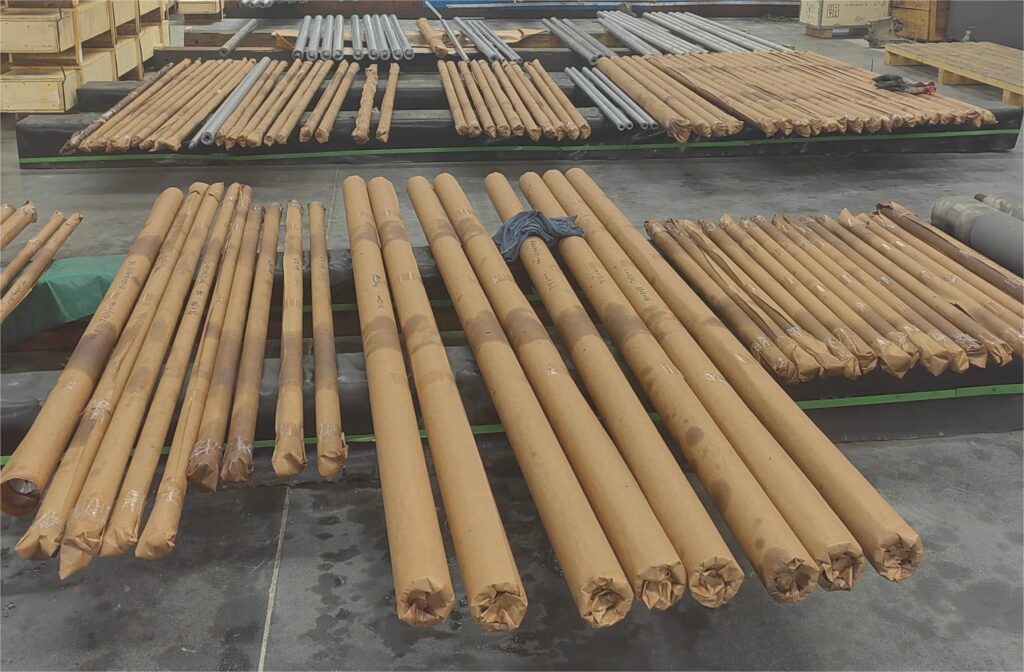
Against the global backdrop of carbon neutrality and green metallurgy, rolling enterprises are actively exploring feasible ways to lower energy consumption and carbon emissions. Many manufacturers focus on optimizing rolling equipment and process parameters, yet overlook the huge energy-saving potential brought by upgrading core consumables — the Roll for Rolling Mill.
As the “heart” of metal rolling lines, the service performance of Roll for Rolling Mill directly affects production stability, downtime frequency and overall energy efficiency. Long-service-life Roll for Rolling Mill delivers comprehensive energy-saving and emission-reduction benefits throughout the full rolling cycle, supporting rolling plants to achieve low-carbon transformation.
- Reduce Frequent Roll Change and Cut Idle Energy Waste
Conventional Roll for Rolling Mill with poor wear resistance requires frequent offline replacement, disassembly and assembly. Every roll change forces the rolling mill to suspend continuous production. During shutdown and restart procedures, auxiliary equipment including motors, hydraulic systems and cooling units still maintains operation, generating massive ineffective power consumption.
Long-service-life Roll for Rolling Mill adopts optimized material formulas such as high-grade forged alloy steel and high-speed steel. With excellent wear resistance and anti-fatigue performance, it extends the service cycle greatly. Less frequent roll replacement minimizes mill downtime. Continuous stable operation avoids repeated start-stop energy loss, directly reducing invalid power consumption for rolling production lines.
- Stable Surface Quality Lowers Additional Rework Energy Consumption
When ordinary Rolls suffers rapid surface wear, surface defects such as uneven texture and local abrasion will appear quickly. These defects transfer to metal strips, resulting in unqualified surface quality. Enterprises have to arrange repeated rolling or surface polishing rework, which consumes extra electricity, cooling water and labor resources.
High-quality long-service-life Roll for Rolling Mill maintains stable surface finish for a longer period. For cold rolling scenarios, the roll surface can consistently keep roughness within the standard Ra <0.2 μm. The qualified rate of finished metal products rises significantly, cutting energy input caused by rework. In addition, uniform roll surface condition keeps rolling load stable, avoiding fluctuating pressure output and lowering extra energy loss of main driving motors.
- Extend Regrinding Cycle and Reduce Carbon Footprint of Roll Maintenance
Every Roll for Rolling Mill needs regular regrinding to eliminate fatigue cracks and restore roll crown and surface precision. Each regrinding process consumes electricity for grinding machines, cutting fluid and auxiliary materials, and generates corresponding carbon emissions. Short-life Roll for Rolling Mill requires more frequent regrinding, increasing the carbon cost of roll shop operation.
Long-service-life Rolls features outstanding resistance to abrasive wear and thermal fatigue. Its stable surface condition prolongs the interval between two regrinding processes. Fewer grinding times reduce energy consumption of roll processing equipment. Meanwhile, slower material loss of Roll for Rolling Mill improves the utilization rate of roll base material, lowering the carbon emission generated from raw material smelting and roll forging production.
- Optimize Rolling Force and Lessen Load on Main Drive System
Severely worn Roll for Rolling Mill leads to uneven contact between roll barrel and metal stock. Rolling mills need to output larger compressive force to meet thickness control requirements. Increased rolling force raises the load of main drive motors, leading to higher unit energy consumption per ton of rolled products.
Long-service-life Roll for Rolling Mill retains complete roll crown and intact surface profile during operation. Uniform contact condition stabilizes rolling pressure. Rolling mills can operate under rated reasonable load rather than overloaded status. Effective reduction of extra driving load realizes continuous energy saving in long-term mass production.
- Adapt to Green Metallurgy Trends and Support Carbon Management Targets
At present, carbon tariff policies and low-carbon procurement standards are gradually implemented in global metal trade. Rolling plants with lower carbon intensity gain stronger market competitiveness. Deploying long-service-life Roll for Rolling Mill is an economical technical path for energy saving without large-scale reconstruction of rolling mill equipment.
Compared with purchasing low-cost short-life Roll for Rolling Mill, the overall life cycle cost of high-durability Roll for Rolling Mill is more advantageous. It simultaneously reduces power consumption, maintenance workload and waste generation, helping enterprises optimize carbon accounting data and satisfy the requirements of sustainable production.
Conclusion
Energy saving and carbon reduction in rolling production is a systematic project. Upgrading to long-service-life Roll for Rolling Mill provides visible and replicable benefits for metallurgical rolling plants.
By cutting downtime frequency, reducing rework rates, extending regrinding cycles and stabilizing rolling load, premium Roll for Rolling Mill effectively lowers comprehensive energy consumption and carbon emissions throughout the production chain.
For metal processing enterprises pursuing green and sustainable development, selecting high-performance, long-service-life Roll for Rolling Mill will become an important part of low-carbon transformation strategy.