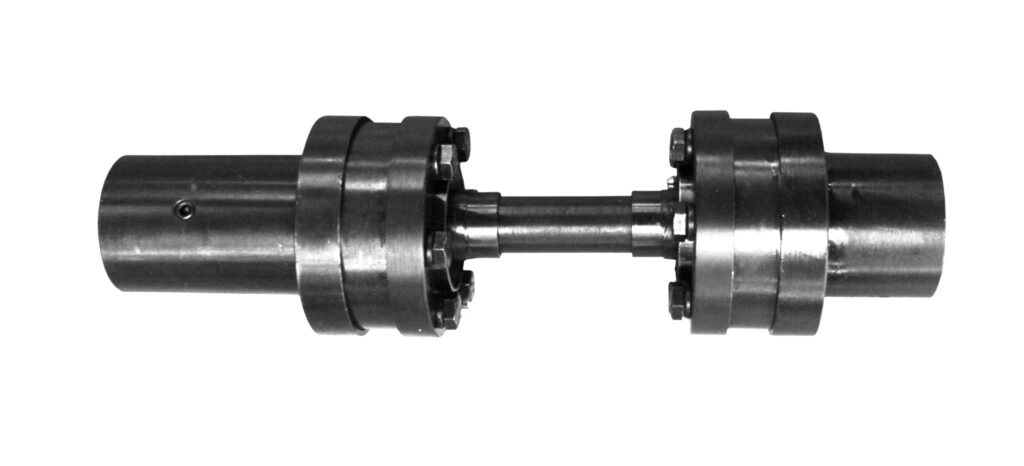
Ball‑cage Constant‑Velocity Universal Coupling use in heavy‑duty continuous metallurgical production facilities, parameter matching directly determines uptime of rolling mills, levelers and continuous‑casting lines. Improper model selection often triggers torsional vibration, premature component failure and unplanned shutdowns, bringing substantial economic losses for metal‑processing plants. According to research published in MDPI engineering journal regarding hot‑rolling mill drive‑system dynamics, misaligned transmission components are one of the leading sources of periodic vibration in strip‑steel production lines.
Meanwhile, ISO 10441:2007, the international standard for flexible couplings used within petroleum and heavy‑process industries, highlights that three core dimensions — working deflection angle, torque rating and installation‑related outer dimension — should form the foundation of heavy‑duty coupling specification work. Among proven heavy‑load transmission components, the Ball‑cage Constant‑Velocity Universal Coupling delivers true constant‑speed output and robust shock‑absorbing performance, serving as a practical alternative to traditional cross‑shaft universal joints.
Working angle, torque capacity and swing diameter constitute three non‑negotiable evaluation indicators for engineers specifying heavy‑duty universal couplings. Working angle defines the allowable angular offset between driving and driven shafts during real‑world service. The standard working‑angle scope for the Ball‑cage Constant‑Velocity Universal Coupling covers 0°‑75°. In practical metallurgical deployment, continuous long‑term operation close to the maximum 75° deflection should be avoided. Large angular deflection magnifies cyclic mechanical stress and accelerates wear on internal ball‑cage assemblies. For leveler and mill drive systems serving non‑ferrous‑metal processing lines, operating angles kept below 45° are recommended for stable long‑duration continuous production.
Torque rating remains the most critical benchmark for finalizing coupling model numbers. Operating beyond torque limits creates permanent structural damage to ball‑cage assemblies, while excessive safety margin brings unnecessary procurement overhead. Our Ball‑cage Constant‑Velocity Universal Coupling offers torque coverage spanning 380 N·m up to 1 000 000 N·m. When calculating application torque requirements, engineering teams must account for peak impact torque generated throughout steel‑making, continuous casting, hot‑rolling and cold‑rolling cycles, rather than relying purely on nominal motor torque values.
For mining, chemical and petroleum‑machinery operating conditions with frequent shock loads, optional overload‑protection devices can be fitted to safeguard the complete drive chain. Requirements for torque verification and overload‑protection configuration are also documented within Chinese national standard GB/T 38392‑2019, which specifies test‑and‑acceptance rules for couplings deployed on metallurgical equipment.
Swing diameter represents another key dimensional metric tightly linked to on‑site installation layout and available radial clearance. The swing diameter of our Ball‑cage Constant‑Velocity Universal Coupling ranges from Φ36 mm to Φ725 mm. Before model selection, engineers must validate reserved installation space on‑site. Insufficient clearance will trigger mechanical interference during shaft deflection and cause sudden equipment failure. For retrofitting existing production‑line equipment, swing‑diameter constraints frequently become the decisive limiting factor for final component selection.
Beyond these three core parameters, structural classification also needs alignment with operating‑condition requirements. This coupling series includes fixed‑type and sliding‑type variants. Fixed‑type units suit applications with stable centre‑to‑centre shaft distance; sliding‑type versions adapt to scenarios with ongoing axial displacement during equipment operation. Benefiting from full constant‑speed characteristics, high transmission efficiency, compact footprint and high dynamic‑balance accuracy, the Ball‑cage Constant‑Velocity Universal Coupling absorbs vibration and impact under heavy‑duty cycles, fitting complex operating conditions found across metallurgical machinery, metal‑working machinery, engineering machinery and mining‑process equipment.
Precise parameter matching lays the groundwork for reliable long‑term equipment operation. End‑users should consult the official product catalog for full technical datasets, combining real‑site working angle, actual peak torque, installation‑space constraints and structural requirements to complete model specification. When properly selected, this coupling delivers stable drive performance for steel‑making, continuous casting, hot‑rolling and cold‑rolling production workflows, helping metallurgical operators minimise unplanned downtime and raise overall line productivity.
References
- ISO 10441:2007, Petroleum, petrochemical and natural gas industries — Flexible couplings for mechanical power transmission — Special‑purpose applications. International Organization for Standardization. https://www.iso.org/obp/ui/en/#iso:std:iso:10441:en
- GB/T 38392‑2019, Metallurgical equipment—Couplings—Test methods, inspecting rules and acceptance codes. National Standards Committee of P.R.China. https://openstd.samr.gov.cn/bzgk/std/newGbInfo?hcno=116AA110FCE94594A34C403134B54630
Are you seeking reliable transmission couplings suitable for steelmaking, continuous casting, hot rolling and cold rolling production lines in metallurgical industry? Visit our official website to view detailed specifications of the Ball‑cage Constant‑Velocity Universal Coupling BJ125 for Metallurgical and Engineering Machinery and obtain customized heavy-duty drive system solutions:https://www.ascon.com.cn/