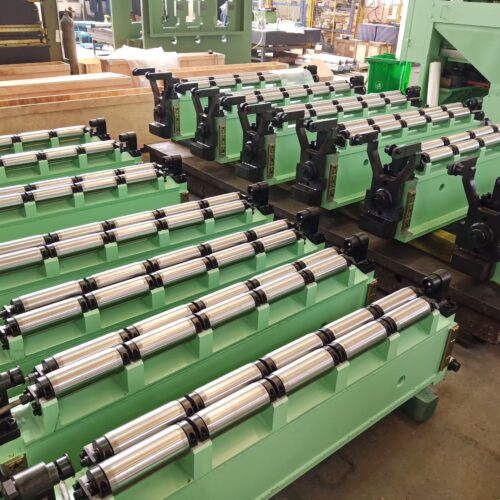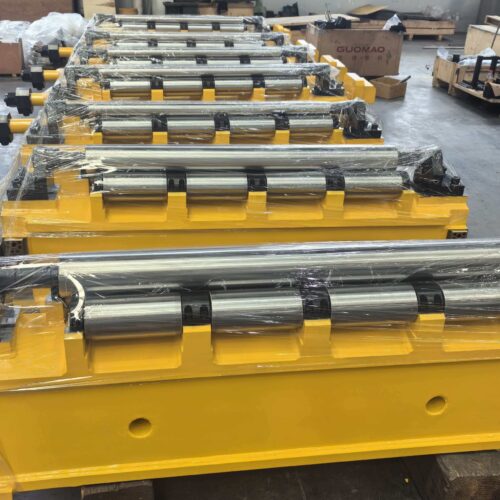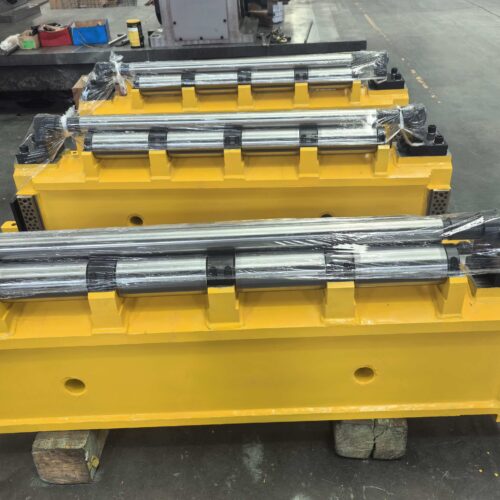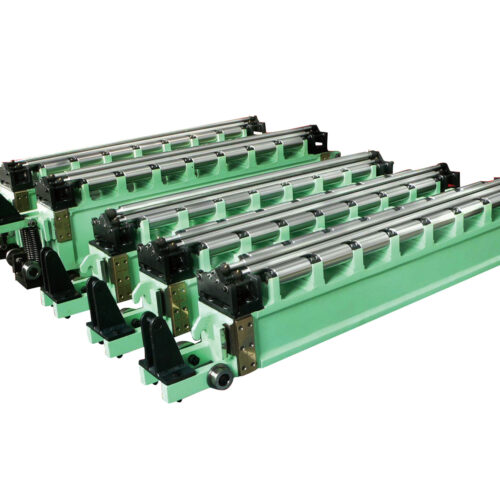
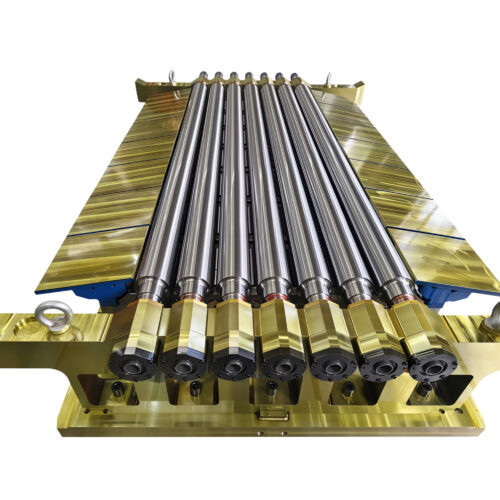
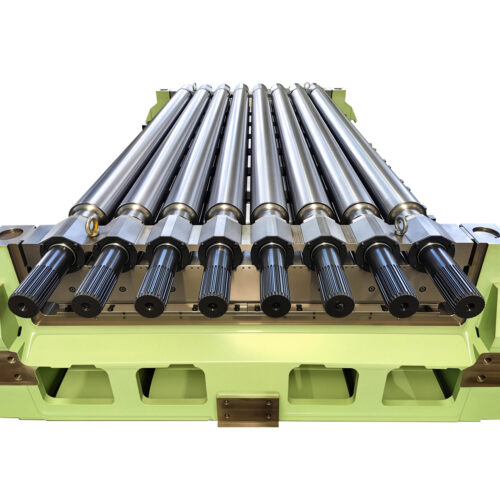
15‑Roll Heavy‑Plate Multi‑Roll Leveler Roll Cassette
1. Product Overview
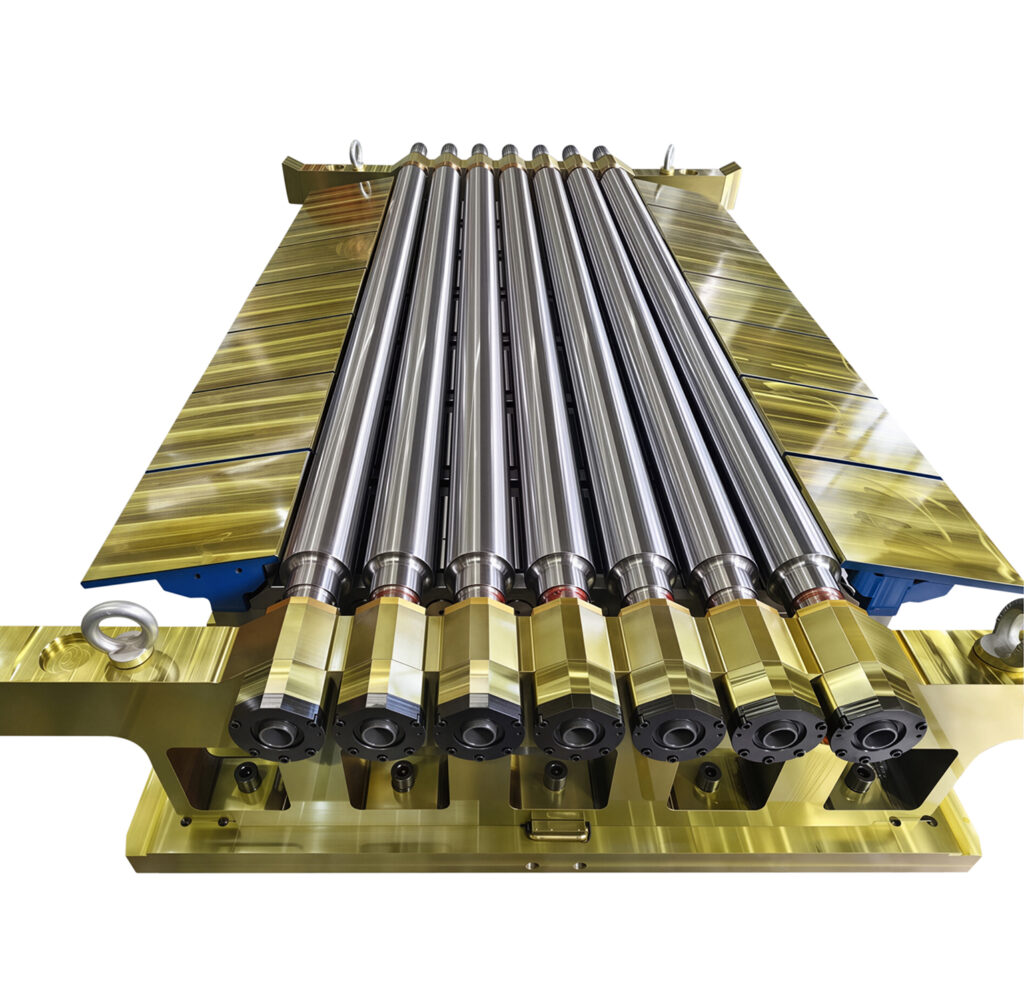
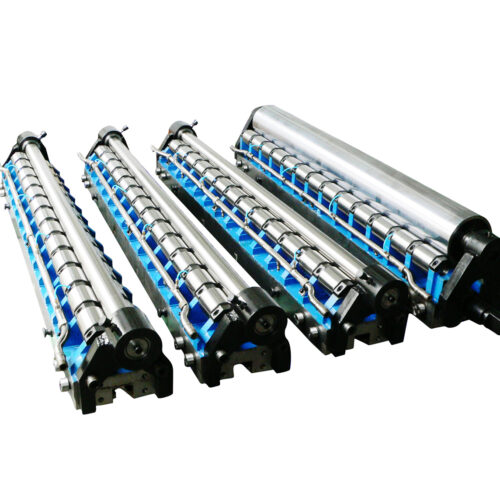
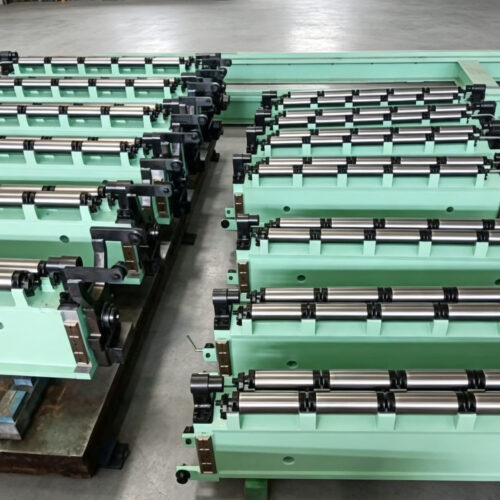
The roll cassette is the core component of a multi‑roll leveler – truly the “heart” of the leveling equipment. In heavy‑plate production, the leveler directly determines the flatness accuracy, stress relief level, and final delivery quality of the product. This product is a dedicated roll cassette for 15‑roll heavy‑plate multi‑roll levelers, specifically designed for medium‑plate and wide‑heavy‑plate production lines. It is used for precision leveling of hot‑rolled or cold‑rolled heavy plates, eliminating shape defects such as waves and buckles to obtain finished plates with high flatness.
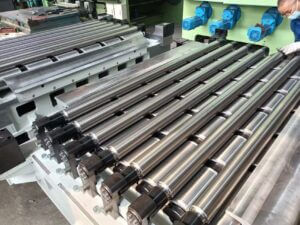
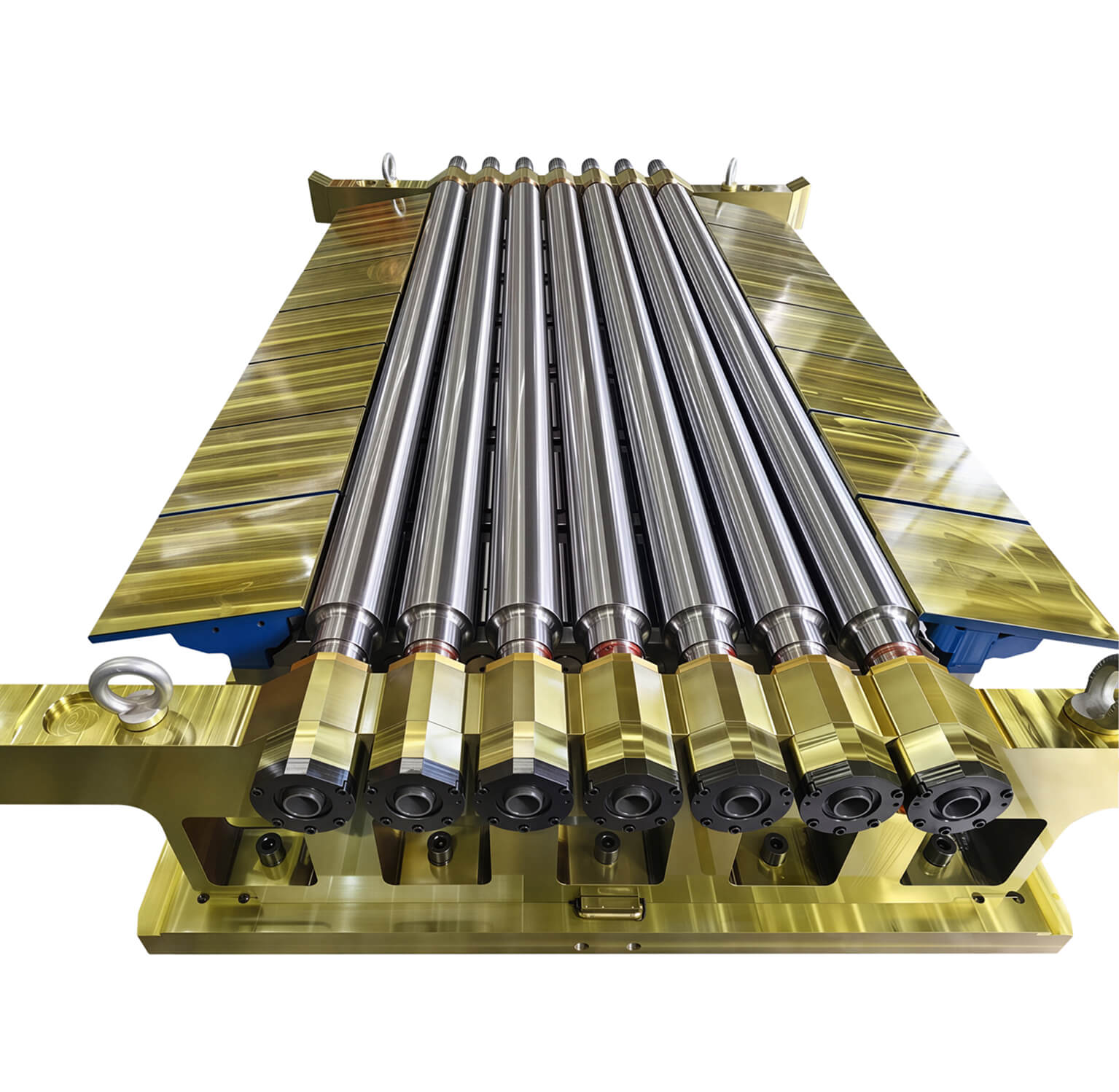
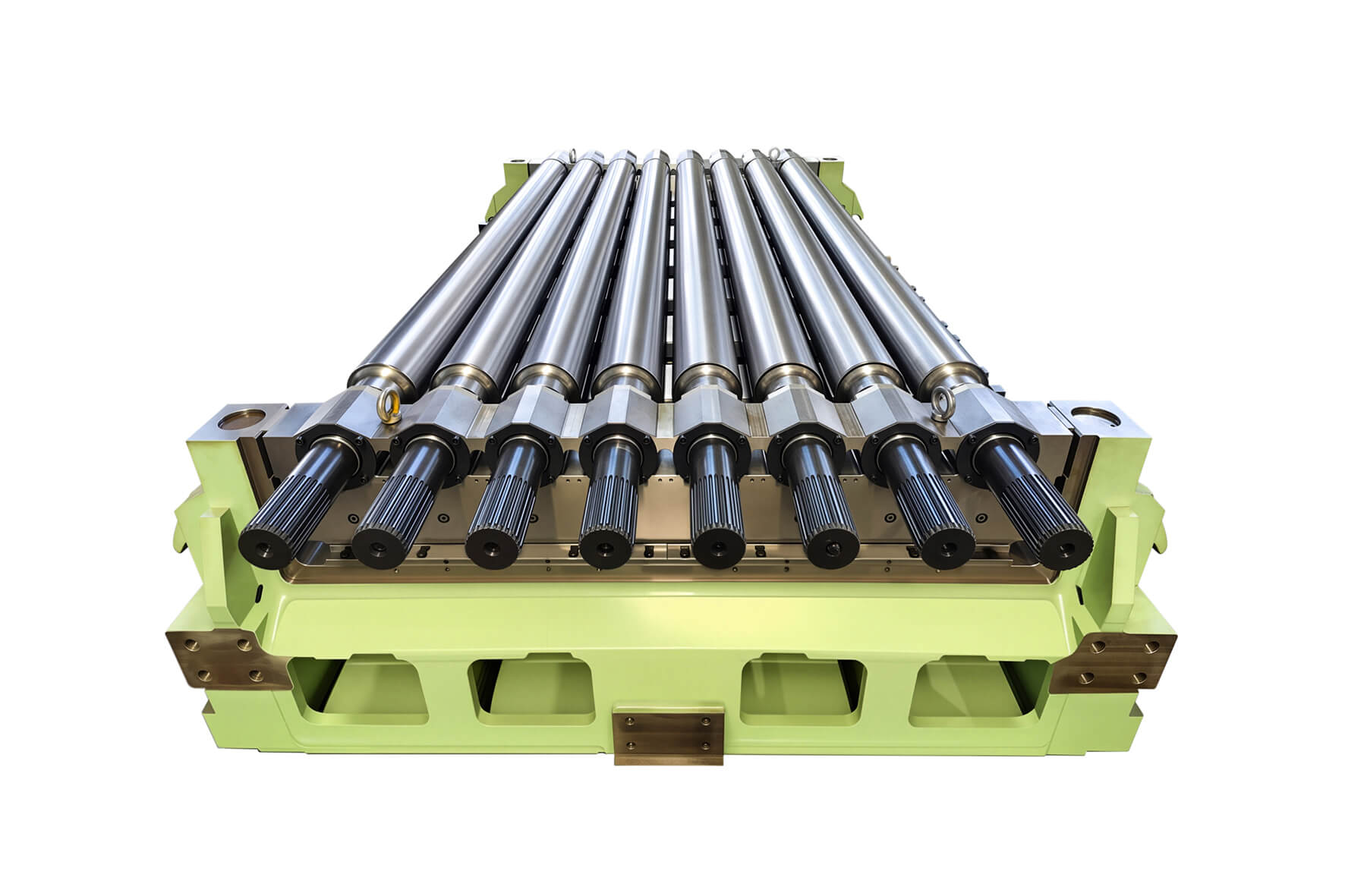
The 15‑roll combined leveler is a strip/plate leveling device that offers a wide leveling range, a complex equipment structure, and high cost‑effectiveness. This roll cassette is based on an optimised 15‑roll combined leveling technology, adopting a four‑high‑type (quarto) configuration. The work rolls are arranged in two layers (7 on the upper layer and 8 on the lower layer), with two layers of backup rolls positioned outside the main leveling rolls to effectively reinforce the strength of the main rolls. The entire cassette features a rational design, high load‑carrying capacity, and high leveling accuracy, and is widely applicable to both hot‑leveling and cold‑leveling processes in medium‑plate and wide‑heavy‑plate production lines.
2. Core Structure and Technical Parameters
2.1 Roll System Configuration
This roll cassette adopts a combined roll system incorporating both large‑diameter rolls and small‑diameter rolls. In this design:
For the small‑roll system, the centre‑to‑centre distance between adjacent rolls is t₁ = (40–80)·hₘᵢₙ.
For the large‑roll system, the centre‑to‑centre distance between adjacent rolls is t₂ ≥ (1.4–9.2)·hₘₐₓ.
The roll diameter of the small‑roll system is d₁ = (0.85–0.95)·t₁.
The roll diameter of the large‑roll system is d₂ = (0.8–0.95)·t₂.
This combination of large and small roll systems enables the leveler to accommodate plates of various thicknesses – ensuring high leveling precision for thin‑gauge products while maintaining process feasibility for thick‑gauge products.
2.2 Work Rolls and Backup Rolls
Work rolls: 15 rolls in total, made of high‑quality alloy steel (e.g., 9CrSi or 60CrMoV forgings), integrally quenched and tempered, with induction‑hardened surfaces. Surface hardness reaches HRC 56–63, hardened layer depth ranges from 3 to 10 mm depending on roll diameter, surface roughness reaches Ra 0.8 μm, and dimensional tolerance meets h6 grade.
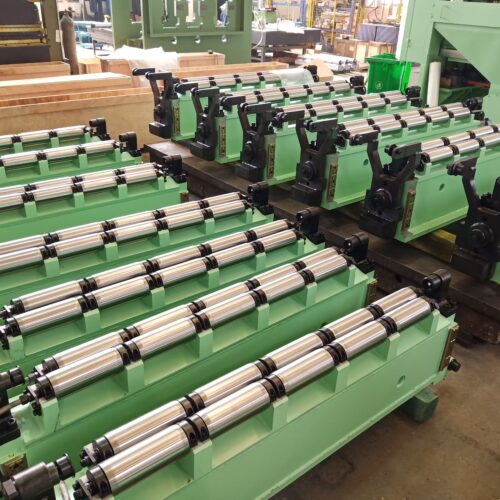
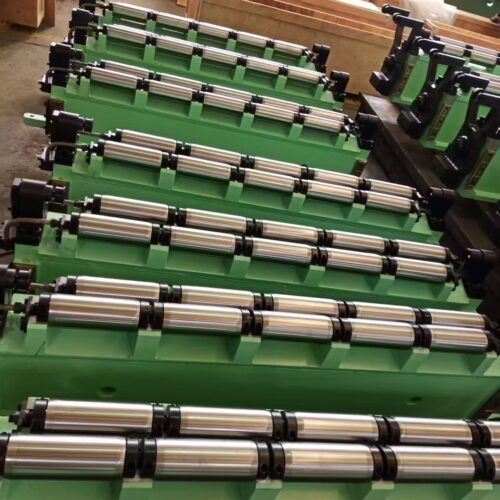
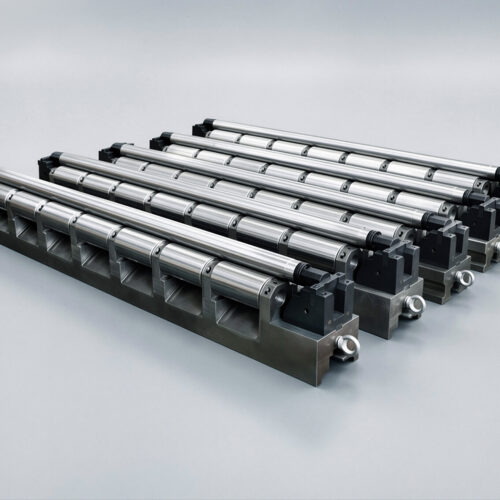
Backup rolls: Arranged in four rows, with a total of 34 backup rolls, employing precision rolling‑mill‑specific bearings that provide low friction and smooth operation.
Work roll material: The work rolls are made of 60CrMoV or 9CrSi forgings, manufactured in accordance with the standard JB/T3164‑2007 “Technical Conditions for Roller‑Plate Levelers”.
2.3 Multi- Leveler Roll Cassette Body
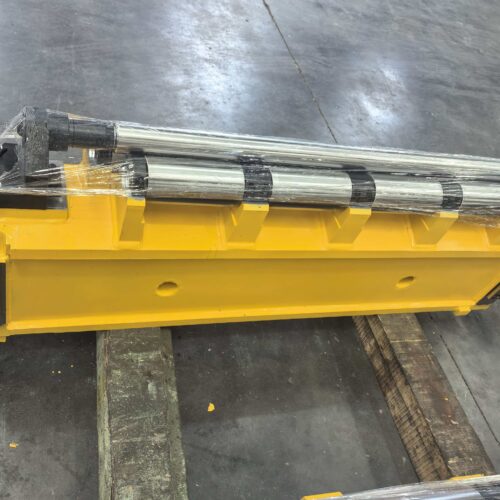
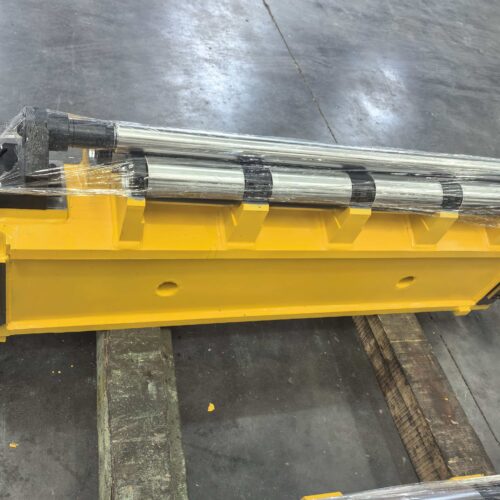
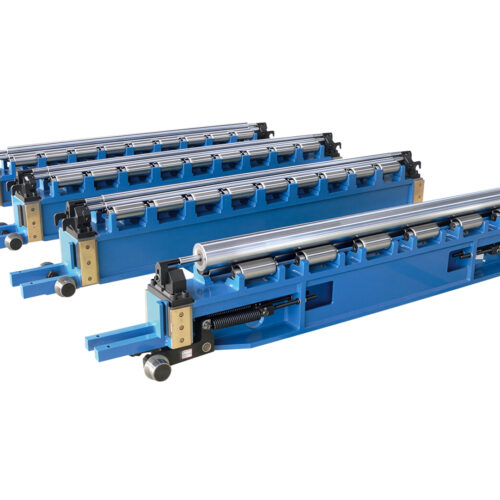
The cassette body is a high‑strength box‑type welded structure, consisting of an upper roll cassette and a lower roll cassette. The upper cassette houses the upper leveling rolls and the lifting/adjustment mechanism, while the lower cassette contains the lower leveling rolls and their support mechanisms. As a major load‑bearing component on wide‑heavy‑plate levelers, the cassette frame operates under high temperatures and high intensities; therefore, the overall casting quality is subject to extremely stringent requirements.
2.4 Key Precision Indicators
| Parameter | Specification |
|---|---|
| Roll cassette assembly accuracy | ≤ 0.05 mm |
| Work‑roll‑to‑backup‑roll clearance | < 0.03 mm |
| Work roll dimensional tolerance | h6 grade |
| Work roll surface roughness | Ra 0.8 μm |
3. Product Technical Advantages
3.1 Multi‑Roll Leveler Roll Cassettes Design for a Wide Leveling Range
This cassette employs a combined structure of large and small roll systems: the large‑roll system handles thick‑gauge plates, the small‑roll system handles thin‑gauge plates, and intermediate transition rolls enable smooth changes between them. A single cassette covers a wide thickness range, achieving ideal leveling results from thin plates to heavy plates.
The bending deformation and curvature evolution of plates during leveling in this 15‑roll combined leveler differ from those in conventional levelers, allowing higher leveling precision. The application of parallel leveling technology and tension leveling technology further improves accuracy, while eliminating the negative‑torque effects on the leveling rolls and expanding the range of material strengths that the leveler can process.
3.2 High Load‑Carrying Capacity for Heavy‑Plate Leveling
In view of the heavy leveling loads typical of thick plates, the structural design of this cassette has been specifically reinforced. A roll‑shaft load‑bearing frame is integrated into the cassette. Based on the triangular stability principle, this frame is positioned directly beneath the roll‑shaft mounting holes to directly support the weight of the roll shafts, substantially increasing the overall load capacity. Together with the densely arranged, high‑capacity backup roll sets, this design easily meets the leveling‑force requirements for high‑strength heavy plates.
3.3 High‑Precision Manufacturing for Guaranteed Leveling Quality
The assembly accuracy of the roll cassette directly affects the overall leveling precision and the resulting flatness quality of the leveled plate. Through precision machining and strict quality control, this product ensures that the cassette assembly accuracy reaches within 0.05 mm and the work‑roll‑to‑backup‑roll clearance is controlled below 0.03 mm. The multiple‑row circular‑arc surfaces of the support plates are machined in a single clamping operation, effectively ensuring the manufacturing and assembly accuracy of the cassette.
The work‑roll journals all use precision rolling‑mill bearings, with a bearing service life of 5–10 years. The work‑roll manufacturing process strictly follows: blanking → forging → post‑forging normalising → rough turning → quenching and tempering → finish turning → surface hardening → finish grinding, ensuring that every work roll meets the design accuracy requirements.
3.4 Quick‑Change Design to Reduce Downtime
As the core component of the leveler, the roll cassette requires periodic maintenance or replacement. This product is equipped with a rapid roll‑change system: a traction bar allows the cassette and its matching universal couplings to be quickly disconnected and pulled out from inside the leveler onto the roll‑change trolley. The structure is simple and compact, making roll changes convenient and fast, with substantially reduced changeover time – effectively increasing production efficiency and reducing operator labour intensity.
During changeover, positioning blocks and phase‑locking plates secure the circumferential phase of the work‑roll spline teeth, ensuring that the spline‑tooth phase of the new cassette is fully consistent with that of the old cassette, enabling rapid and precise interchange.
3.5 Individual Roll Drive for High Efficiency and Energy Savings
This cassette is paired with an individual‑drive technology, in which each work roll is driven by its own independent motor‑reducer unit. This effectively resolves mechanical interference and negative‑torque issues between the plate and the driven rolls. The technology enables linear progressive reduction leveling for medium and heavy plates, improving mechanical efficiency and single‑pass leveling accuracy. Because the bending reduction gradually decreases from entry to exit, both total leveling force and total power consumption are reduced, saving energy.
4. Application Scenarios
This product is primarily suitable for the following applications:
Medium‑plate production lines: heavy‑plate leveling in both hot‑leveling and cold‑leveling processes
Wide‑heavy‑plate production lines: leveling operations on 4300‑mm‑class wide‑heavy‑plate rolling mills
High‑strength steel plate leveling: controlled‑rolled and controlled‑cooled plates with high yield strength
Specialty and special‑steel heavy plates: plate products with stringent flatness requirements
5. Maintenance and Care
5.1 Routine Maintenance
Regularly remove residual iron filings, scale, and other debris from the roll surfaces to prevent foreign matter from becoming embedded in the roll gap and affecting leveling accuracy.
Periodically check all fastening connections on the roll cassette to ensure they are secure.
Monitor changes in the work‑roll‑to‑backup‑roll clearance and make timely adjustments.
5.2 Lubrication Management
This cassette can be paired with an oil‑air lubrication system, which uses parallel connections to achieve point‑to‑point precision lubrication for each lubrication point. Both the primary and secondary distributors are externally mounted for easy maintenance, enabling independent lubrication and independent servicing.
5.3 Accuracy Restoration
For cassettes that have been in service for many years, accuracy restoration can be performed: ensure that the cassette mounting surfaces and the backup‑roll bearing housing mating surfaces are tightly assembled, so that the leveling force is transmitted evenly through the backup rolls to the cassette body. When roll surfaces show scratches or wear, promptly re‑grind them to restore the surface condition.
6. Conclusion
The 15‑roll heavy‑plate multi‑roll leveler roll cassette is the key equipment for ensuring plate shape quality on heavy‑plate production lines. With its core advantages of combined roll system design, high load capacity, precision manufacturing processes, and quick‑change functionality, this product is dedicated to providing customers with efficient, stable, and precise heavy‑plate leveling solutions – helping steel producers improve the flatness quality of their heavy‑plate products and strengthen their market competitiveness.