For plant owners and procurement specialists building or upgrading new‑energy metal processing lines, strip flatness stability is no longer a secondary optimization factor but a core standard that determines product qualification rates and long‑term production profitability.
Many production failures in galvanizing, annealing and coating processes stem from uncorrected strip flatness defects carried over from cold rolling, including edge waves, central buckles and camber. As verified in Sendzimir’s authoritative technical research on galvanizing‑line processes, professional tension‑leveling equipment serves as an essential supporting unit for continuous production lines. It cooperates with skin‑pass systems to eliminate residual strip deformation and unqualified flatness, effectively avoiding batch quality fluctuations in subsequent processes.
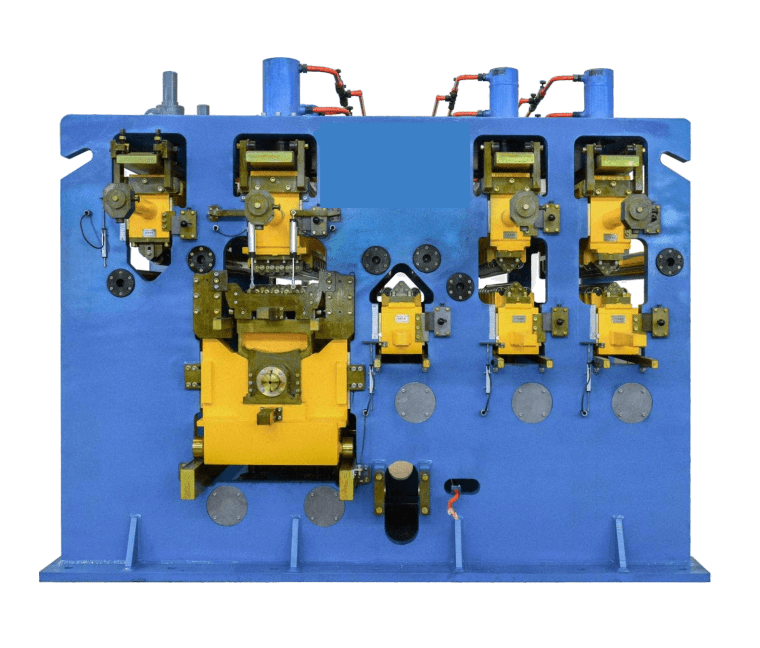
For manufacturers focusing on new‑energy‑material manufacturing, selecting a dry‑type tension straightener delivers targeted compatibility and quality improvements across all mainstream continuous processing lines. Each production process has strict flatness requirements that conventional straightening equipment cannot fully meet.
In continuous hot‑dip galvanizing production, strip flatness directly controls the uniformity of zinc coating. GalvInfoNote’s industry technical reports confirm that irregular strip surfaces cause real‑time deviations in air‑knife working clearance, resulting in inconsistent coating thickness, local uncoated areas and unstable finished‑product quality. Installing a dry‑type tension straightener completely corrects incoming flatness defects before the galvanizing process, standardizing coating thickness and improving the surface finish of new‑energy galvanized steel.
For continuous annealing lines, unlevel strip and residual rolling stress lead to uneven heat conduction during furnace treatment, resulting in inconsistent material hardness and mechanical performance of finished strips. The tension straightener eliminates internal stress and surface waviness, ensuring uniform annealing effects and stable mechanical properties for downstream new‑energy‑component processing.
In tension levelling and recoiling lines, dry‑type structural design completely avoids liquid‑residue contamination common with wet‑type equipment. It improves coil flatness without introducing secondary impurities, producing high‑purity flat coils that can be directly used for subsequent coating and deep‑processing procedures, greatly simplifying production workflows.
Similarly, color‑coating and tin‑plating production lines rely entirely on flat and smooth strip surfaces. Tiny waviness will cause uneven paint adhesion and color difference after curing, while flatness fluctuations in tin‑plating processes lead to inconsistent tin‑layer thickness and reduced corrosion resistance. The dry‑type tension straightener provides stable flatness guarantees for these high‑precision surface‑treatment processes.
When evaluating equipment solutions for new‑energy thin‑strip production, most buyers prioritize operational stability, zero contamination and low maintenance costs — core advantages of dry‑type tension straighteners compared with traditional wet‑type leveling systems. Wet‑type leveling relies on process liquid for auxiliary correction, which leaves residual moisture and impurities on the strip surface. This requires additional cleaning and drying procedures, increasing production costs and bringing hidden contamination risks for high‑standard galvanizing and coating products. The dry‑type structure achieves pure‑mechanical tension bending and leveling without any auxiliary liquid, perfectly matching the high‑cleanliness requirements of new‑energy metal‑strip production.
This equipment is professionally optimized for new‑energy mainstream thin‑gauge‑strip specifications, covering strip thickness from 0.15 mm to 4.0 mm, and adaptable to carbon steel, cold‑rolled steel, stainless steel and aluminum‑strip materials widely used in new‑energy industries. In response to the high‑speed continuous‑operation demands of modern metallurgical lines, the tension straightener supports a maximum running speed of 600 m/min. It stably corrects incoming‑strip flatness of 30‑50 I down to a high‑precision flatness of 3‑5 I, fully adapting to long‑cycle, high‑load continuous‑production scenarios.
To match different production‑line widths and flatness‑correction standards, manufacturers can select suitable models according to actual production needs. The two‑bending & one‑levelling Tension Leveler is ideal for medium‑width‑strip production with conventional flatness requirements, while the two‑bending & two‑levelling tension straightener provides stronger correction capacity for wider strips and higher‑standard new‑energy‑material production lines.
References
‑ Sendzimir, M.G., Cividino, H. Tension leveling and skinpassing in a galvanizing line .https://sendzimir.com/wp‑content/uploads/2024/03/Tension‑Leveling‑and‑Skinpassing‑in‑a‑Galvanizing‑Line
‑ GalvInfoNote 2.8. Improving Uniformity of Appearance & Controlling Discontinuous Yielding Behavior https://www.galvinfo.com/wp‑content/uploads/sites/8/2019/01/GalvInfoNote‑2‑8.pdf